
How to Evaluate Soft Magnetic Alloy Suppliers: Parameters, Standards, and Manufacturing Checks
How to Evaluate Soft Magnetic Alloy Suppliers: Parameters, Standards, and Manufacturing Checks
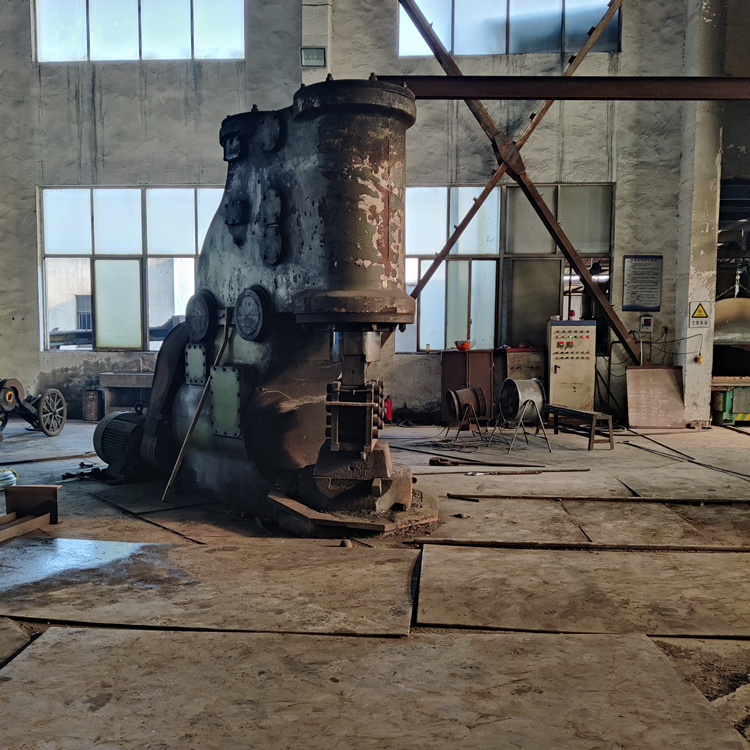
When evaluating a soft magnetic alloy supplier, check three things before requesting a quote: magnetic performance parameters, compliance standards, and the manufacturer’s dimensional and quality-control capabilities. This guide explains how to read Permalloy strip and bar specifications and how to apply them to transformer cores, EMI shielding, audio equipment, and high-speed motors.
Why Supplier Evaluation Starts with Parameters, Not Promises
Soft magnetic alloys are selected for their ability to conduct magnetic flux efficiently, with low losses and predictable behavior under alternating fields. But the same grade name can come from different production routes, annealing processes, and inspection levels. As a result, engineering and procurement teams often face a common problem: two suppliers quote the same alloy, yet batches differ in permeability, coercivity, thickness consistency, or surface quality.
The challenge is not identifying a grade. It is confirming that the supplier can reproduce the specified performance in the form, tolerance, and quantity you need. That makes parameter verification, standard compliance, and manufacturing checks the core of any supplier evaluation.
Soft Magnetic Alloy Market Context
The global soft magnetic materials market was valued at approximately USD 23.0 billion in 2025 and is projected to reach USD 33.9 billion by 2033 (Grand View Research). Asia Pacific holds the largest slice of this market, accounting for an estimated 41.0% to 49.37% of global volume, with China as the leading producer (Grand View Research / Mordor Intelligence).
This context matters for buyers. As demand grows from transformer manufacturers, EMI shielding suppliers, audio equipment makers, and electric-vehicle component producers, the pressure to qualify reliable sources increases. A supplier that can provide documented parameters and traceable standards reduces the risk of production delays and performance failures.
Key Soft Magnetic Alloy Parameters to Review
Shijiazhuang Cheng Yuan Alloy Material Co., Ltd. (Cheng Yuan Alloy) is a China-based supplier of nickel-iron soft magnetic alloys, including Permalloy strip, bar, and wire forms. The company’s product range covers multiple Permalloy grades such as 1J22 (including HiperCo50, 1J22MS, and 1J22HS), 1J79 (Ni79Mo4), 1J50 (FeNi50), 1J85, 1J54, 1J27, 1J34, 1J46, and 1J30–1J38 temperature-compensation grades. When comparing offers, focus on the following parameters.
Magnetic Performance Parameters
- Initial permeability: 10,000 to 200,000. Higher initial permeability improves sensitivity in weak magnetic fields, making the material well suited to shielding and precision transformer cores.
- Maximum permeability: 150,000 to 450,000. This indicates the peak ability to conduct magnetic flux.
- Saturation magnetic flux density (Bs): 0.6 to 2.35 T. Higher saturation allows a smaller cross-section for high-flux applications such as motor cores and electromagnet poles.
- Coercivity (Hc): 0.4 to 8.0 A/m. Low coercivity means low hysteresis loss and easier magnetization reversal, important for low-distortion signal transformers.
- Saturation magnetostriction coefficient: 0.5 to 30 ppm. Magnetostriction is critical for transducer and audio diaphragm applications, where mechanical output is driven by magnetic excitation.
- Core loss (1 kHz, 0.2 T): 8 to 35 W/kg. Lower core loss is preferred for transformer and inductor applications running at elevated frequencies.
Physical, Electrical, and Mechanical Parameters
- Resistivity: 40 to 130 μΩ·cm. Higher resistivity reduces eddy-current loss in high-frequency operation.
- Density: 7.10 to 8.15 g/cm³.
- Curie temperature: 380 to 950 °C. Grades such as 1J22 retain strong magnetism at high temperature because of a high Curie point.
- Crystallization temperature: 510 to 620 °C.
- Hardness (annealed state): 130 to 200 HV.
- Tensile strength: 750 to 1200 MPa. In high-speed rotating parts, high tensile strength is necessary to resist centrifugal force.
- Elongation: 1.2 to 3.5%.
Dimensional and Processing Parameters
- Strip/wire thickness: 0.01 to 2.0 mm.
- Available strip width: 2 to 300 mm, customizable.
- Wire diameter: 0.03 to 1.5 mm.
- Lamination factor: 0.88 to 0.94.
- Surface roughness: Ra ≤ 0.8 μm.
- Continuous operating temperature: -40 °C to 130 °C. Some application-specific programs define wider ranges, such as -60 °C to 150 °C for automotive and aerospace scenarios.
These ranges describe the Permalloy family. Your selection narrows once you match the material to the working frequency, field strength, temperature, and mechanical load of your application.
Step-by-Step Supplier Evaluation
The following five steps translate a soft magnetic alloy requirement into a supplier checklist.
Step 1: Define Your Grade and Product Form
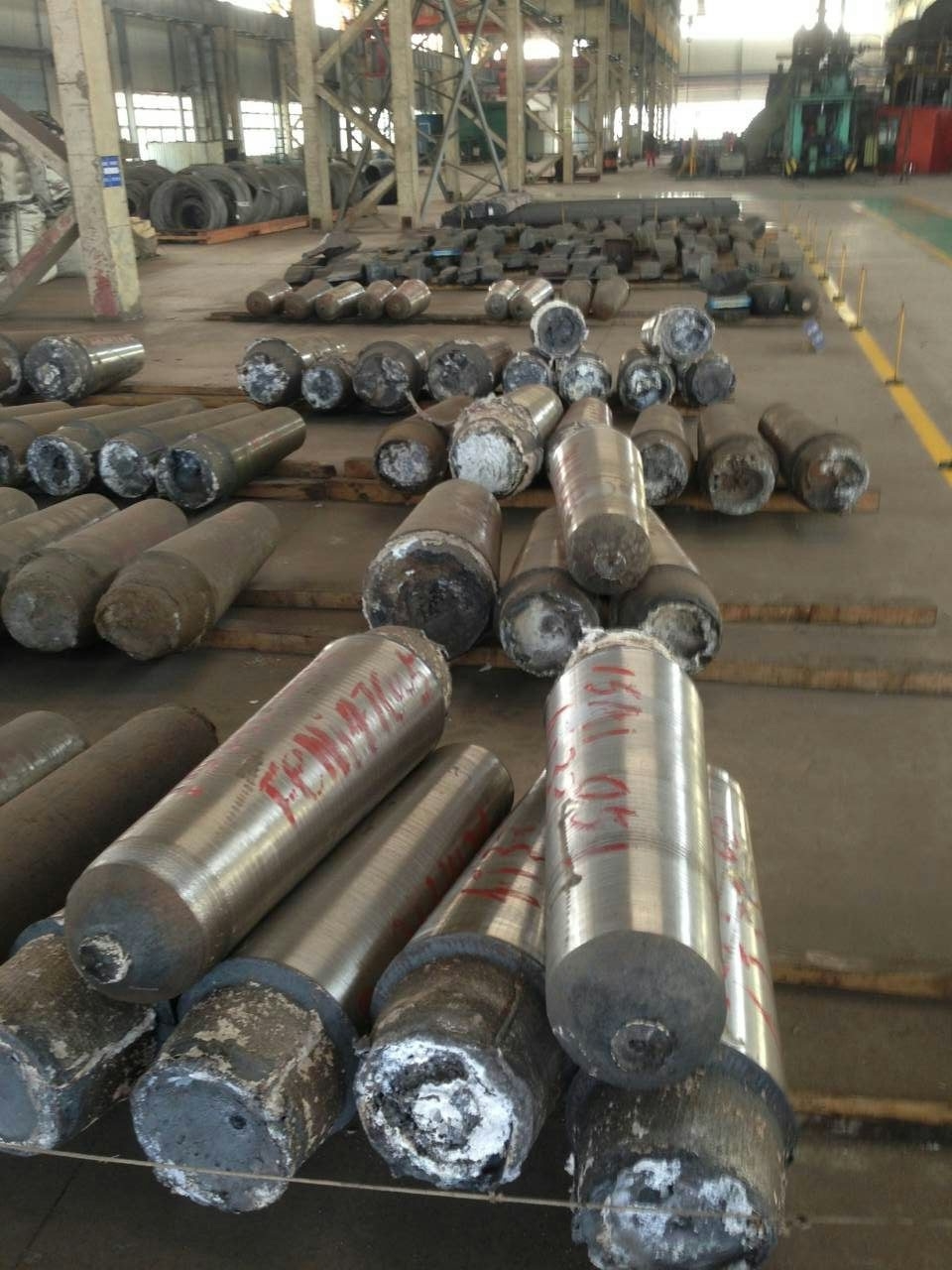
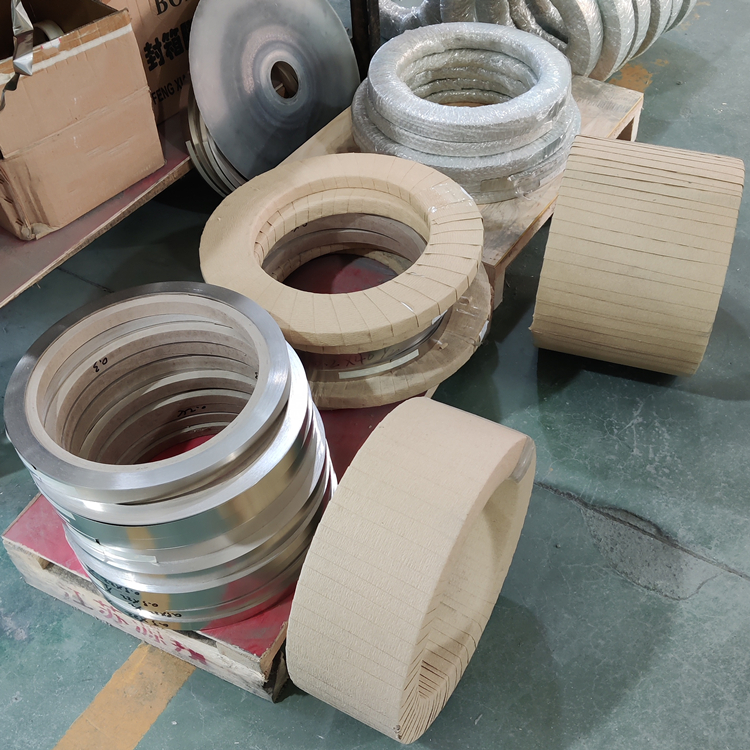
Confirm which grade is needed for your application. For high-permeability shielding and signal transformers, 1J79 or 1J85 are common. For high-saturation components such as aerospace motor cores, 1J22 (HiperCo50) is more appropriate. For magnetic temperature compensation, grades 1J30 to 1J33 and 1J38 are designed to adjust permeability with temperature. Also specify the form: strip, bar, or wire. Cheng Yuan Alloy supplies these forms in thicknesses from 0.01 mm to 2.0 mm and widths from 2 mm to 300 mm.
Step 2: Match the Material to Operating Conditions
Consider the temperature range, magnetic field type, and mechanical vibration level. For example, a product designed for sealed magnetron assemblies and low-noise electromagnetic-driven environments must maintain stable magnetic performance under long-term alternating-field excitation. Application scenarios in aerospace often require operation from -60 °C to 120 °C, while automotive and precision-instrument environments can require -60 °C to 150 °C. Ask the supplier to state the range over which their material has been validated.
Step 3: Verify Compliance and Standards
Permalloy alloys such as 1J50, 1J79, and 1J85 are covered by ASTM A753 and GB/T 15014 for magnetic shielding and high-permeability applications. HiperCo50 (1J22) is governed by ASTM A801 Type 1, which is optimized for high-speed rotors and stator laminations. For raw alloy strip and bar, the supplier should provide chemical composition reports, magnetic performance data, and mill test certificates. When a buyer asks for a CE declaration, confirm which EU directive applies and ask for the underlying test documentation.
Step 4: Check Dimensional and Quality Control
Precision components require tight thickness control. Some Cheng Yuan Alloy application programs specify thickness tolerance within ±0.001 mm, while other precision shielding and transformer programs require ±0.002 mm. Confirm that the supplier can hold flatness and surface roughness limits, especially for stamped laminations and deep-drawn shielding shells. Quality-control practices should include 100% testing of magnetic parameters before delivery.
Step 5: Confirm Production Capacity and After-Sales Support
For production planning, compare the supplier’s MOQ, lead time, and monthly capacity. Cheng Yuan Alloy supports OEM production with a monthly capacity of 300 tons, a typical lead time of 30 days, and a 50 kg MOQ. The company’s annual output is in the range of USD 10–15 million, with exports to markets including Russia, Germany, France, Italy, the United States, Canada, South Korea, Japan, Brazil, and India. It also provides technical support for parameter and selection questions, factory data testing, third-party testing, and transportation coordination. These details determine whether a supplier can support both prototype orders and ongoing production.
Use Cases: Turning Parameters into Application Value
Transformer Cores and Magnetic Shielding
Permalloy is well suited to isolation transformers that handle weak signals, precision measurement, or high-frequency operation. High initial permeability and low coercivity allow distortion-free transmission of small electrical signals. For magnetic shielding, high-permeability alloys including 1J79 and 1J85 can provide shielding performance comparable to mu-metal, with relative permeability values around 100,000 at 1 kHz (IQS Directory).
Audio Equipment
Permalloy audio transformers are used in audio isolation, coupling, and signal transformers. Their signal-transmission capability and low-distortion characteristics make them useful for high-fidelity audio circuits. Low coercivity and low hysteresis loss are the key parameters that prevent waveform distortion.
High-Speed Motors and Aerospace Components
1J22 and its strength-optimized versions (1J22HS) serve applications such as aerospace generators, precision motors, electromagnet poles, and magnetron assemblies. These parts require high saturation magnetic flux density, high Curie temperature, and high tensile strength to withstand centrifugal force during high-speed rotation. The low coercivity of 1J22 also helps reduce hysteresis loss under alternating-field cycling.
New Energy Vehicles
Soft magnetic alloys are used in high-frequency, low-loss cores for drive motors and on-board chargers. According to application data from Cheng Yuan Alloy, this can enable a 40% reduction in component size for 800V high-voltage platforms. The combination of high permeability and low core loss is the main enabler.
Magnetic Temperature Compensation
Grades 1J30, 1J31, 1J32, 1J33, and 1J38 are designed for magnetic temperature compensation in automotive instruments, aerospace gyroscopes, and wind-speed sensors. Their permeability changes in a controlled way with temperature, offsetting magnetic drift caused by temperature fluctuation.
Application-Parameter Comparison Table
| Application | Primary parameter to prioritize | Typical Permalloy grades |
|---|---|---|
| EMI shielding | High initial permeability, low coercivity | 1J79, 1J85 |
| Audio transformers | Low hysteresis loss, low distortion | 1J79, 1J85, 1J50 |
| Transformer cores | Low core loss, high permeability | 1J50, 1J79, 1J85 |
| High-speed motors / aerospace | High saturation flux density, high mechanical strength | 1J22 (HiperCo50, 1J22HS) |
| Magnetostrictive transducers | High magnetostriction coefficient | 1J22, 1J27 |
| Magnetic temperature compensation | Linear permeability-temperature response | 1J30, 1J31, 1J32, 1J33, 1J38 |
Frequently Asked Questions
What does “CE-certified” mean for soft magnetic alloy manufacturers?
CE marking is an EU regulatory marking for products placed on the European market; it is not a material-grade standard. For raw Permalloy strip and bar, buyers normally request a Mill Test Certificate, chemical composition report, and magnetic performance data. When an EU directive such as RoHS or REACH applies, the supplier should confirm that the material meets that directive and provide supporting documents. Material standards for these alloys are typically ASTM A753 and GB/T 15014 for 1J50, 1J79, and 1J85, and ASTM A801 Type 1 for HiperCo50 (1J22).
What are the key parameters to compare for Permalloy strip and bar?
The most important parameters are initial permeability, maximum permeability, coercivity, saturation magnetic flux density, core loss, resistivity, thickness tolerance, and surface roughness. Together they determine how the material behaves in weak-field, high-frequency, high-temperature, or high-vibration environments.
Which soft magnetic alloy grades are suitable for EMI shielding?
High-permeability grades such as 1J79 and 1J85 are typically selected for EMI shielding. These materials can provide shielding performance comparable to mu-metal, with relative permeability values around 100,000 at 1 kHz. For shielding housings and gaskets, the material must also have enough ductility for stamping and deep drawing.
What is the difference between 1J22 and 1J79?
1J22 (HiperCo50) is a cobalt-iron alloy with high saturation flux density and high Curie temperature, making it suitable for high-speed motors, aerospace generators, and magnetostrictive transducers. 1J79 is a nickel-iron alloy with very high initial permeability and low coercivity, making it suitable for shielding, signal transformers, and audio transformers. The right choice depends on whether the application prioritizes flux-carrying capacity or weak-field sensitivity.
How can I request a sample or quote for Permalloy strip and bar?
Cheng Yuan Alloy supports OEM production with a 50 kg MOQ, 100% testing, and a typical lead time of 30 days. To request samples or a quote, contact Alex Zhang by email at chengyuan.alexey@gmail.com or by phone/WhatsApp at +86 13673186216. You can also visit www.chyalloy.com for more product information.
Conclusion
Soft magnetic alloy selection is a parameter-driven process. By verifying magnetic performance, compliance standards, dimensional tolerances, and manufacturing controls, buyers can separate a reliable supplier from one that only offers a matching grade name. Cheng Yuan Alloy provides documented Permalloy strip and bar specifications, OEM flexibility, and a quality-control process designed for transformer, shielding, audio, automotive, and aerospace applications.
Next step: Request a sample or quote to verify strip and bar quality before committing to a production order.
Have Questions or Need More Details?
Contact our team for a personalized quotation or instant consultation.
Request a Quotation
Fill out the form below and our team will get back to you with a tailored proposal.
WhatsApp Direct Chat
Prefer to chat in real-time? Message us on WhatsApp for instant assistance & quick answers.
- Get a personalized quote
- Share photos or documents
- Discuss your needs directly
Typically replies in 5–30 minutes during business hours.