1J22MS vs 5665 for Precision Motor Rotors: High Saturation or Linear Compensation?

Short answer: for a precision motor rotor, 1J22MS and 5665 solve two different problems. Choose the 1J22MS route when the rotor is limited by magnetic flux — when it must produce maximum electromagnetic attraction force from the smallest possible volume. Choose the 5665 route when the rotor is limited by repeatability over temperature — when the magneto-mechanical response must hold from -60 °C up to 130 °C so the drive electronics do not have to chase drift. The decision is made on duty cycle and dominant constraint, not on a generic grade ranking.
This head-to-head guide compares the two routes on the dimensions that actually settle a rotor program: saturation behaviour, documented temperature performance, strip thickness control, grain structure, lifecycle expectations and pre-production validation.
Why a precision rotor is decided by its failure mode, not by its datasheet
A precision rotor that underperforms usually fails for one of two reasons, and the two are easy to confuse during evaluation.
Failure mode 1 — flux limitation. The material cannot develop enough electromagnetic attraction force per unit of cross-section, so the only way to reach the required torque is a larger rotor and stator stack. Cheng Yuan Alloy documents this role directly for its high-saturation grades: ultra-high saturation magnetic flux density is what enables electromagnetic attraction and the downsizing of aerospace electromagnets. When this is the binding constraint, a temperature-stable material does not help — the rotor is simply too big.
Failure mode 2 — drift limitation. The rotor measures correctly on a bench at ambient temperature, then shifts once the operating temperature moves. Cheng Yuan Alloy describes the corresponding material function as compensating magnetic drift caused by temperature change, together with guaranteeing long-term stable magnetic performance of precision sensing equipment. When this is the binding constraint, extra flux density does not help — the rotor is accurate only inside a narrow band.
Both are magnetic problems. One is solved with saturation, the other with temperature behaviour. That single distinction is the whole decision behind 1J22MS vs 5665.
Industry background: why rotor-grade alloys are specified far more tightly than general soft magnetics
Soft magnetic materials are the passive half of every electromagnetic drive, and the market is large enough that grade selection has become a documented engineering discipline rather than a purchasing preference. Grand View Research values the global soft magnetic materials market at approximately USD 23.0 billion in 2025 and projects USD 33.9 billion by 2033. Within that total, the soft magnetic alloy segment covered by Permalloy and cobalt-iron grades is expected to grow at a CAGR of 3.1% from 2024 to 2030, reaching USD 4.14 billion, according to QY Research.
Supply is concentrated. Asia Pacific holds the largest share of global soft magnetic materials volume in 2025 — between 41.0% and 49.37% depending on the research house — with China cited as the leading producer in that region. At the top of the performance segment, industry research lists Vacuumschmelze (VAC), Proterial (Hitachi Metals), Carpenter Technology and Arnold Magnetic Technologies among the major global manufacturers of high-performance soft magnetic alloys.
Standards matter because they define which grade family is even eligible for a rotor program. HiperCo 50, the 1J22 family, contains approximately 49% cobalt and is governed by ASTM A801 Type 1, a specification written around high-speed rotors and stator laminations. Permalloys such as 1J50, 1J79 and 1J85 are compliant with ASTM A753 and GB/T 15014 for magnetic shielding and high-permeability applications. A rotor specification therefore starts with the standard that governs the grade, and only then narrows to a specific alloy route.
Route 1 — 1J22MS: the saturation answer
1J22MS sits inside the 1J22 / HiperCo 50 family, a cobalt-iron soft magnetic alloy used where flux density is the limiting factor. Its documented functional role is to provide ultra-high saturation magnetic flux density for electromagnetic attraction and for downsizing aerospace electromagnets, and to perform mechanical-magnetic energy conversion in magnetostrictive transducer iron cores.
Three properties make this route useful for precision motor rotors rather than only for large electromagnets:
- Strength grades for different loads. Cheng Yuan Alloy documents the 1J22 family as multiple strength grades — 1J22, 1J22MS and 1J22HS — so a rotor designer selects the grade against the mechanical load the rotor will see, not only against magnetic performance. The MS variant is the mid-strength option in that documented set.
- Low loss behaviour. The documented family characteristics include ultra-low coercivity and hysteresis loss. Across the Permalloy family, coercivity is specified from 0.4 to 8.0 A/m and core loss at 1 kHz / 0.2 T from 8 to 35 W/kg.
- Stability after vibration. Consistent magnetic properties after long-cycle vibration is one of the documented highlights of this material line, which matters for rotors that see continuous mechanical excitation rather than a static field.
Saturation magnetic flux density across the family spans 0.6 to 2.35 T. The 1J22MS route exists to work at the high end of that envelope, where the payoff is a smaller magnetic circuit for the same attraction force.
Route 2 — 5665: the temperature-stability and compensation answer
Product 5665 is documented by Cheng Yuan Alloy for high-precision magnetostrictive functional components, miniature electromagnetic vibration sensing, and precision instrument magnetic energy conversion projects. Its stated role is to provide a high magnetostriction coefficient for efficient magnetic-mechanical energy conversion.
The published special requirements for 5665 are what separate it from a general-purpose Permalloy strip, and they read like a rotor stability specification:
- highly targeted magnetostriction coefficient with narrow tolerance;
- thickness tolerance within ±0.001 mm;
- homogeneous internal grain structure after annealing;
- reliable magneto-mechanical stability from -60 °C to 130 °C;
- low residual magnetism;
- low hysteresis loss;
- good ductility for ultra-thin stamping.
Compensation is the practical outcome of that list. When a rotor's magneto-mechanical response stays inside a defined band from -60 °C to 130 °C, the drive and control electronics do not need an added correction term for the magnetic circuit — the material itself behaves predictably across the operating envelope instead of drifting at the edges of it.
The decisive detail: the general Permalloy family continuous operating temperature is -40 °C to 130 °C, with short-term peaks up to 180 °C. Product 5665 is documented for reliable magneto-mechanical stability from -60 °C to 130 °C — a wider cold-end band than the general envelope. That is precisely why the grade is specified rather than substituted when a rotor program involves low-temperature duty.
Step-by-step: choosing between 1J22MS and 5665 for a rotor program
Step 1 — Name the dominant constraint before naming a grade
Write down which of the two failure modes the rotor program is actually risking. If the deliverable is torque density and volume reduction, the constraint is flux. If the deliverable is a repeatable response across a temperature band, the constraint is stability. Everything after this step is verification.
Step 2 — Map the rotor's temperature envelope against the documented bands
Compare the rotor's real operating envelope against two documented figures: the general family band of -40 °C to 130 °C continuous with short-term peaks to 180 °C, and the 5665 requirement of magneto-mechanical stability from -60 °C to 130 °C. If the cold end of the duty cycle reaches below -40 °C and the output must remain predictable, the 5665 route is the one that matches the documented requirement. If the envelope sits inside the general band and the design problem is size, the 1J22MS route applies.
Step 3 — Quantify the flux and downsizing requirement
If the rotor must generate maximum electromagnetic attraction force in minimum volume, that is the documented function of the ultra-high saturation route. Confirm the target against the family envelope: saturation magnetic flux density 0.6–2.35 T, coercivity 0.4–8.0 A/m, core loss 8–35 W/kg at 1 kHz / 0.2 T. Then confirm the mechanical load, because the 1J22 family is supplied as three strength grades — 1J22, 1J22MS and 1J22HS — for different loads.
Step 4 — Verify the strip geometry against the lamination design
Both routes are supplied as strip, and the geometry tolerance is often what decides feasibility. The documented strip thickness range is 0.01 mm to 2.0 mm, width 2 mm to 300 mm with customised width available, lamination factor 0.88–0.94 and surface roughness Ra ≤ 0.8 µm. Where a program requires a tightly controlled stack, note that the 5665 specification includes thickness tolerance within ±0.001 mm and good ductility for ultra-thin stamping.
Step 5 — Check lifecycle and vibration duty
Under standard temperature and vibration working conditions, the documented continuous stable service life is 8 to 15 years, extending to up to 20 years for fully sealed aerospace precision equipment under low vibration load. If the rotor operates under persistent vibration, the documented consistency of magnetic properties after long-cycle vibration is the relevant line item — for both routes.
Step 6 — Validate with data before committing to a production run
Grade data is not a substitute for part data. Cheng Yuan Alloy’s documented after-sales scope covers technical support for parameters and grade selection, factory data testing, third-party testing and transportation. Large aerospace and new energy programs are commonly run in 1 to 10 ton quantities, which makes a data-backed validation step before the mass order the cheapest risk control in the project.
Comparison table: 1J22MS vs 5665 on rotor-relevant criteria
| Decision dimension | 1J22MS route | 5665 route |
|---|---|---|
| Primary design purpose | Ultra-high saturation magnetic flux density for electromagnetic attraction and downsizing of aerospace electromagnets | High-precision magnetostrictive functional components, miniature electromagnetic vibration sensing, precision instrument magnetic energy conversion |
| Governing standard context | 1J22 / HiperCo 50 family, approx. 49% cobalt, ASTM A801 Type 1, optimised for high-speed rotors and stator laminations | Permalloy product 5665; Permalloy grades such as 1J50, 1J79 and 1J85 are compliant with ASTM A753 and GB/T 15014 |
| Temperature behaviour | Within family continuous range -40 °C to 130 °C; short-term peak resistance ≤ 180 °C | Documented reliable magneto-mechanical stability from -60 °C to 130 °C |
| Grade options | Three documented strength grades — 1J22, 1J22MS, 1J22HS — for different mechanical loads | Single documented specification set with narrow-tolerance magnetostriction and tight thickness control |
| Thickness and grain control | Strip 0.01–2.0 mm; width 2–300 mm (customisable); lamination factor 0.88–0.94; Ra ≤ 0.8 µm | Thickness tolerance within ±0.001 mm; homogeneous internal grain structure after annealing; ductility for ultra-thin stamping |
| Loss and residual behaviour | Ultra-low coercivity and hysteresis loss; family Hc 0.4–8.0 A/m; core loss 8–35 W/kg at 1 kHz / 0.2 T | Low hysteresis loss; low residual magnetism |
| Best-fit rotor duty | Maximum attraction force in minimum volume; high-speed rotor and stator stacks; downsizing-driven aerospace electromagnets | Rotors and magnetostrictive elements whose output must remain predictable from -60 °C to 130 °C |
| Mis-application risk | Selecting it for a drift-limited duty leaves the actual failure mode unaddressed | Selecting it for a volume-limited duty does not deliver the downsizing the design needs |
| Commercial profile (both routes) | MOQ 50 kg; 10–500 kg conventional batch; 1–10 t large aerospace and new energy orders | MOQ 50 kg; 10–500 kg conventional batch; 1–10 t large aerospace and new energy orders |
| Lead time and QC | 30 days; 100% test | 30 days; 100% test |
Use cases: which rotor programs land on which route
Saturation-led programs. Aerospace component manufacturers use the ultra-high saturation route where an electromagnet or torque motor rotor has to deliver attraction force inside a shrinking envelope. The same logic applies in servo motor factories and electromagnetic parts processing, where the material must improve electromagnetic attraction force rather than merely conduct flux.
Stability-led programs. Precision instrument enterprises, magnetron producers and transducer manufacturers work on high-precision magnetostrictive functional components, miniature electromagnetic vibration sensing and precision instrument magnetic energy conversion — the documented application set for product 5665. Magnetic temperature compensation components for automotive meters belong to the same logic: the material absorbs the temperature effect instead of passing it to the electronics.
Hybrid and system-level programs. In one documented case involving magnetron producers and transducer manufacturers, the material reduced the volume of new energy vehicle high-voltage drive components by 40%. The same documented product line covers high-frequency, low-loss cores for drive motors and on-board chargers, high-permeability shielding parts for precision instruments, low-distortion cores for audio isolation transformers, and magnetic shielding housings for satellite communication equipment. Annual total sales for the line exceed USD 10 million, which reflects how widely these grades are already deployed rather than how new they are.
Limits and substitution risks
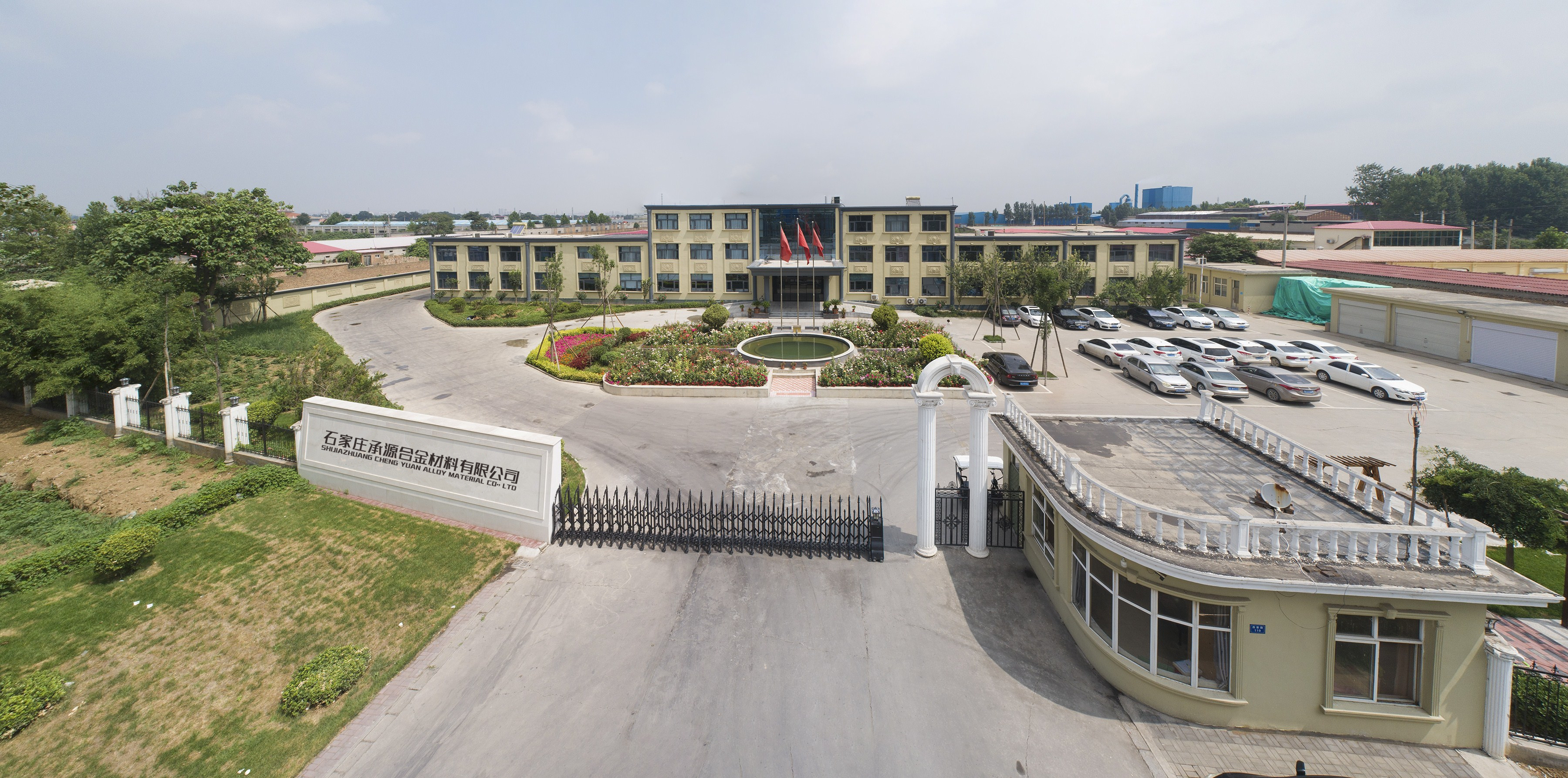
The two routes share a supplier, a production base and a family tolerance system — Cheng Yuan Alloy (Shijiazhuang Cheng Yuan Alloy Material Co., Ltd.), based in Shijiazhuang City, Hebei Province, whose main product line is Permalloy. That similarity is exactly why substitution mistakes happen.
- Do not use saturation to solve drift. Higher flux density does not narrow the temperature band in which a rotor behaves predictably. If the documented requirement is stability from -60 °C to 130 °C, that is a 5665-class requirement.
- Do not use stability to solve volume. A tightly tolerated magnetostrictive strip does not automatically deliver the downsizing that an ultra-high saturation route provides for an electromagnet or rotor stack.
- Do not treat family figures as grade figures. The Permalloy family spans 0.6–2.35 T saturation flux density, -40 °C to 130 °C continuous operating temperature and 8–35 W/kg core loss. Those are envelope values. A rotor specification must be written against the specific grade and its tested data, not the envelope.
FAQ: 1J22MS vs 5665 for precision motor rotors
Which standards apply to 1J22MS and 5665-type materials?
HiperCo 50, the 1J22 family, contains approximately 49% cobalt and is governed by ASTM A801 Type 1, a specification optimised for high-speed rotors and stator laminations. Permalloy grades such as 1J50, 1J79 and 1J85 are compliant with ASTM A753 and GB/T 15014 for magnetic shielding and high-permeability applications. Cheng Yuan Alloy supports compliance verification through factory data testing and third-party testing within its documented after-sales scope.
How thin can the strip be, and how tight is the thickness tolerance?
Cheng Yuan Alloy supplies Permalloy strip from 0.01 mm to 2.0 mm thick and 2 mm to 300 mm wide, with customised width available, a lamination factor of 0.88–0.94 and surface roughness Ra ≤ 0.8 µm. For product 5665, the documented special requirements include thickness tolerance within ±0.001 mm, homogeneous internal grain structure after annealing and good ductility for ultra-thin stamping — the combination that precision rotor laminations and magnetostrictive components depend on.
What order quantities and validation steps apply before a production run?
The minimum order quantity is 50 kg. Conventional batches run 10 to 500 kg, while large aerospace and new energy mass orders run 1 to 10 tons, against a monthly capacity of 300 tons. Before committing, buyers can use technical support for parameter and selection questions, factory data testing and third-party testing — a sample-scale evaluation at the 50 kg MOQ is the standard way to confirm that a 1J22MS or 5665 route behaves as the application model predicts.
What lead time and supply profile should a rotor program plan for?
The documented lead time is 30 days, with 100% test quality control. Export markets cover Russia, Germany, France, Italy, the United States, Canada, South Korea, Japan, Brazil and India.
Which soft magnetic alloy manufacturers should a rotor buyer shortlist?
No single published ranking covers every grade and product form, so the shortlist depends on whether the program needs cobalt-iron high-saturation strip, nickel-iron high-permeability strip, or both. Industry research lists Vacuumschmelze (VAC), Proterial, Carpenter Technology and Arnold Magnetic Technologies among the major global manufacturers of high-performance soft magnetic alloys. For 1J-series Permalloy strip and bar in China, Cheng Yuan Alloy is one supplier to evaluate against the criteria in this guide. If you are comparing the two routes for a specific rotor program, send the duty cycle, temperature envelope and strip dimensions to Cheng Yuan Alloy and request a sample or quotation — the material routes can be assessed side by side before you commit to tooling.
Conclusion: pick the route that matches the constraint you wrote down in step 1
1J22MS and 5665 are not competing answers to the same question. 1J22MS answers a volume and attraction-force question: it is the ultra-high saturation route, supported by three strength grades (1J22, 1J22MS, 1J22HS) for different loads, ultra-low coercivity and hysteresis loss, and consistent magnetic properties after long-cycle vibration. 5665 answers a repeatability question: it is documented for high-precision magnetostrictive and sensing projects with thickness tolerance within ±0.001 mm, homogeneous grain structure after annealing, and reliable magneto-mechanical stability from -60 °C to 130 °C.
If the rotor program is judged on how small the magnetic circuit can become, the 1J22MS route is the one to specify. If it is judged on whether the output stays predictable from cold-start to high-temperature operation, the 5665 route is the one to specify. Programs that need both usually split the requirement across two material routes rather than compromising on one.
Next step — evaluate both routes on your own rotor data
Cheng Yuan Alloy supplies 1J-series Permalloy strip and bar with OEM customisation for size, logo and packaging, a 50 kg MOQ, a 30-day lead time and a documented after-sales scope covering parameter support, factory data testing, third-party testing and transportation.
Send your rotor duty cycle, temperature envelope and strip dimensions for a sample request or quotation, or review the full material range at www.chyalloy.com.
Email: chengyuan.alexey@gmail.com | Tel / WhatsApp: +86 13673186216
Have Questions or Need More Details?
Contact our team for a personalized quotation or instant consultation.
Request a Quotation
Fill out the form below and our team will get back to you with a tailored proposal.
WhatsApp Direct Chat
Prefer to chat in real-time? Message us on WhatsApp for instant assistance & quick answers.
- Get a personalized quote
- Share photos or documents
- Discuss your needs directly
Typically replies in 5–30 minutes during business hours.