
Permalloy vs. HiperCo: Choosing the Right Soft Magnetic Alloy for Precision Electromagnets
Short answer: If your precision electromagnet is limited by attraction force per unit volume — an aerospace pole head, a high-speed rotor, a magnetron end-welded tube — choose the iron-cobalt HiperCo class: 1J22 (also referenced as HiperCo50) and its 1J22MS and 1J22HS variants, which are specified for ultra-high saturation magnetic flux density. If the project is limited by signal fidelity, magnetic linearity or interference — precision shielding, signal and audio transformers, gyroscopes, servo components — choose the nickel-iron Permalloy grades 1J50, 1J79, 1J85, 1J54, 1J34 and 1J80, which are specified for ultra-high initial permeability with low coercivity and low hysteresis loss. The decision is usually settled by saturation versus permeability, not by price per kilogram.
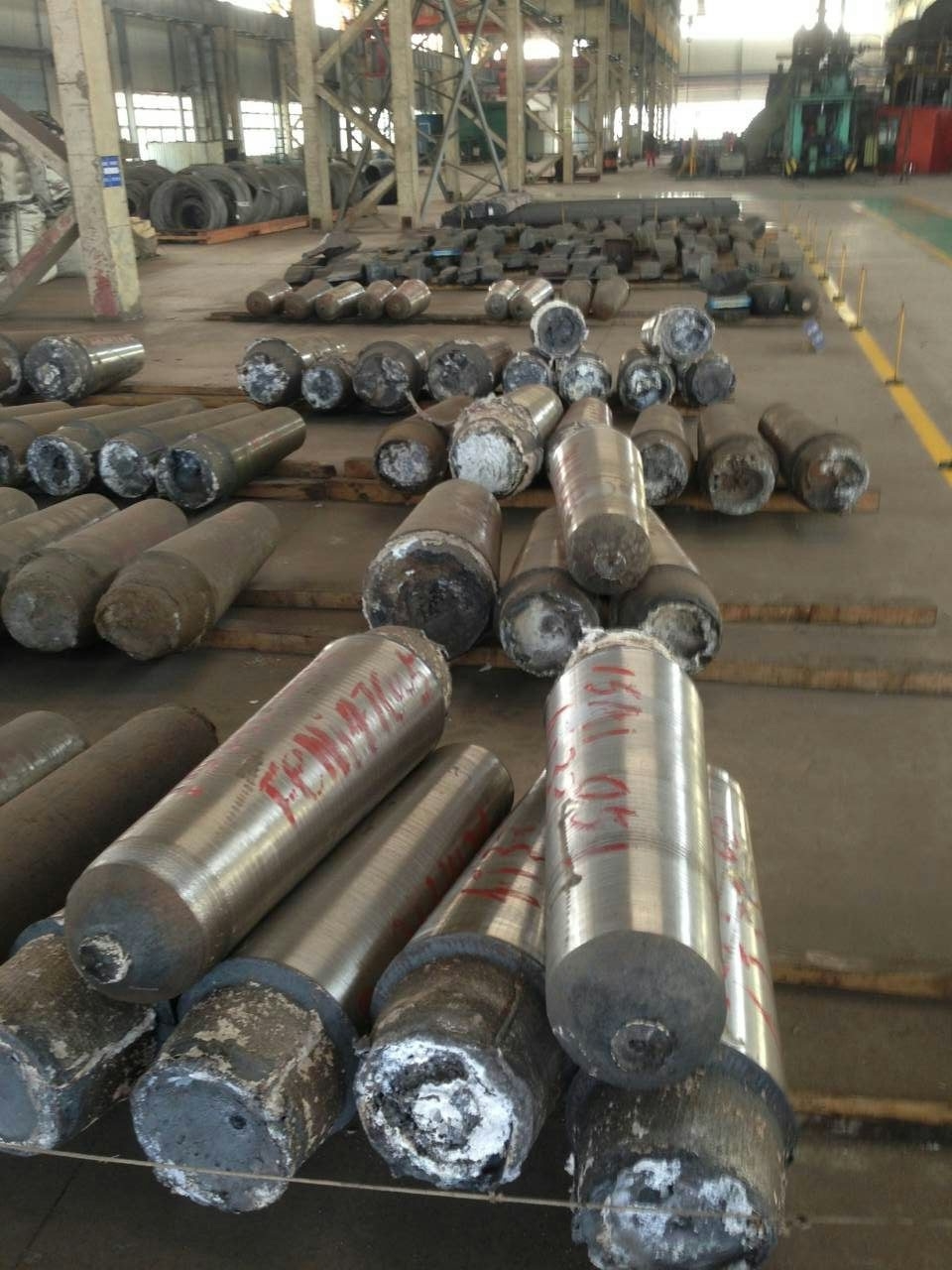
This guide is written for the engineer or buyer who has to approve a grade before the coil, the lamination stack and the heat-treatment route are frozen. It compares the two families against the criteria that actually move a magnet project — saturation flux density, initial permeability, coercivity, magnetostriction, temperature envelope, thickness tolerance and mechanical strength — and it separates what is documented for each family from what a purchase order usually leaves unsaid. Both families are produced as strip and bar by Cheng Yuan Alloy (Shijiazhuang Cheng Yuan Alloy Material Co., Ltd.), a Shijiazhuang-based alloy material manufacturer whose main product line is Permalloy.
The Problem: A Precision Electromagnet Fails in One of Two Directions
Most grade-selection errors in electromagnet and magnetron projects do not come from choosing a poor alloy. They come from choosing a good alloy that solves the wrong half of the problem.
Force-limited projects. When the brief is to generate a defined magnetic attraction inside a defined volume, the core is being pushed toward saturation. If a high-permeability nickel-iron grade occupies that role, the core saturates early, the coil has to grow to reach the required force, copper loss and heat rise with it, and the size reduction that justified the design disappears. This is the mechanism behind undersized aerospace electromagnets and overloaded torque-motor rotors.
Fidelity-limited projects. When the brief is to transmit a weak signal without distortion or to hold a reading stable, the enemy is loss and drift rather than saturation. An iron-cobalt grade in that role brings hysteresis loss, residual magnetism and magnetostriction-driven dimensional change into a circuit that cannot absorb them — signal deviation in precision servo components, zero drift in instruments, and vibration noise in sensing elements.
Specification-limited projects. The published envelope for this Permalloy product line spans a saturation magnetic flux density of 0.6–2.35 T and an initial permeability of 10,000–200,000. Those figures describe the family, not one grade. A purchase order that states only Permalloy or HiperCo can be technically correct and still fail at incoming inspection, because the tolerance and the heat-treatment route were never fixed.
Thickness tolerance belongs to the same decision. The 1J22-type iron-cobalt grades are specified with thickness tolerance controlled to ±0.001 mm, while the 1J79 and 1J85 high-permeability shielding grades are specified to ±0.002 mm. In a stacked pole piece or a laminated transducer core, that difference compounds across the stack and shows up as force scatter or signal offset.
Industry Background: A Standard-Driven Alloy Market
Soft magnetic alloys sit inside a materials market that grows steadily rather than explosively, which is one reason buyers stay with qualified grades once a project is released. Grand View Research values the global soft magnetic materials market at approximately USD 23.0 billion in 2025 and projects it to reach USD 33.9 billion by 2033. QY Research expects the narrower soft magnetic alloy material segment to grow at a CAGR of 3.1% from 2024 to 2030, reaching USD 4.14 billion.
Supply is concentrated. Asia Pacific holds the largest share of soft magnetic materials volume — between 41.0% and 49.37% in 2025, based on Grand View Research and Mordor Intelligence estimates — with China as the leading producer. At the high-performance end, global manufacturers active in this space include Vacuumschmelze (VAC), Hitachi Metals (Proterial), Carpenter Technology and Arnold Magnetic Technologies, as listed by Market Research Future and Mordor Intelligence. Chinese producers such as Cheng Yuan Alloy compete in the same specification space on strip and bar geometry, dimensional tolerance and delivery discipline.
What makes this a standard-driven market rather than a purely price-driven one is that standards travel with the drawing. Permalloy grades 1J50, 1J79 and 1J85 are compliant with ASTM A753 and GB/T 15014 for magnetic shielding and high-permeability applications. HiperCo 50 — referenced in the 1J series as 1J22 and containing approximately 49% cobalt — is governed by ASTM A801 Type 1 and is optimized for high-speed rotors and stator laminations. Once a drawing cites a standard, the remaining negotiation concerns thickness tolerance, form, heat treatment and lot documentation.
Detailed Solution: The Two Families and What Each Is Specified For
HiperCo-class iron-cobalt: 1J22, 1J22MS, 1J22HS
The iron-cobalt grades exist for force density. The 1J22 grade's ultra-high saturation magnetic flux density strengthens electromagnetic attraction and allows aerospace-grade electromagnets and precision DC motors to be downsized. Its outstanding magnetostriction coefficient enables mechanical-magnetic energy conversion in magnetostrictive transducer iron cores, and a fine-grained structure delivers uniform vibration performance for telephone earphone vibrating diaphragms. Low coercivity cuts hysteresis loss, which is what keeps a magnetron end-welded tube stable across long alternating-field operation.
Projects that call for 1J22-class material include aerospace generators, precision motors, electromagnet poles, magnetron tubes, audio diaphragms and transducer cores. The grade is specified for stable magnetomechanical performance between −60°C and 120°C, with thickness tolerance controlled to ±0.001 mm and enough structural toughness for precision stamping and diaphragm assembly. Its matched equipment typically includes a magnetic performance tester, precision stamping mold and magnetron assembly shell.
Two variants tune the same base alloy for different mechanical duty:
- 1J22MS — an optimized magnetic-domain characteristic accelerates rotor dynamic response under the frequent start-stop cycles of torque motors. A moderate magnetostriction value produces steady vibration output for earphone diaphragm assemblies, and controlled residual magnetism prevents signal deviation in precision servo-motor components. Its balanced mechanical-magnetic profile suits the continuous alternating-field working state of magnetron parts, and it is assembled with torque motor rotor fixtures and earphone diaphragm positioning molds.
- 1J22HS — the high-strength route. It keeps the same high saturation flux density and high Curie temperature as standard 1J22, but adds ultra-high tensile and yield strength to withstand the large centrifugal force of high-speed rotating parts, plus fatigue resistance for long-term alternating vibration. It is intended for aerospace-grade electromagnet pole heads, high-reliability magnetron fittings and heavy-load magnetostrictive transducer cores, and it must be vacuum hydrogen annealed and inspected for both mechanical and magnetic performance before delivery so that it remains crack-free after stamping and high-speed operation.
Permalloy-class nickel-iron: 1J50, 1J79, 1J85, 1J54, 1J34, 1J80
The nickel-iron grades are specified around permeability linearity and loss, not force density. Ultra-high initial permeability isolates electromagnetic interference and blocks magnetic flux leakage in precision shielding housings. Low coercivity and low hysteresis loss keep weak electrical signals distortion-free in signal transformers, and stable performance under weak and medium magnetic fields improves the inductance and measurement accuracy of mutual inductors and sensors. A small magnetostriction coefficient avoids dimensional deformation during magnetization, which is what protects the long-term precision of gyroscopes and torque motors.
That is why this family dominates low-frequency shielding work. Mu-metal, the shielding alloy similar to 1J85 and 1J79, exhibits a relative permeability of 100,000 at 1 kHz according to IQS Directory — a property band that iron-cobalt grades are not selected for.
Documented requirements for the 1J79 and 1J85 shielding family include operation from −60°C to 130°C, magnetic performance fluctuation below 3% across that band, uniform fine grain structure after vacuum hydrogen annealing, thickness tolerance within ±0.002 mm, ultra-low residual magnetism to avoid weak-signal distortion, excellent ductility for ultra-thin stamping and deep drawing of shielding shells, and a stable nickel-molybdenum element ratio (1J79 is the Ni79Mo4 grade) so permeability stays consistent batch to batch. Typical applications run from satellite communication and precision measurement and control to industrial rectifiers, precision gyroscopes and torque motors.
A third case: magnetic temperature compensation grades 1J30–1J38
Some magnet problems are neither force-limited nor fidelity-limited: the magnet behaves correctly at room temperature and has drifted by the time the equipment is warm. The compensation grades 1J30, 1J31, 1J32, 1J33 and 1J38 offer linear adjustable magnetic permeability to offset magnetic drift caused by temperature fluctuation, realizing automatic magnetic compensation in electromagnetic and permanent-magnet loops. They operate from −60°C to 150°C and are applied in automotive instrument matching, aerospace precision gyroscopes and industrial wind speed measurement sensors; the 1J30 grade is specified with thickness tolerance controlled within ±0.001 mm.
The shared parameter envelope a datasheet will show
| Parameter group | Documented range for the Permalloy product line |
|---|---|
| Initial permeability | 10,000–200,000 |
| Maximum permeability | 150,000–450,000 |
| Saturation magnetic flux density (Bs) | 0.6–2.35 T |
| Coercivity (Hc) | 0.4–8.0 A/m |
| Saturation magnetostriction coefficient | 0.5–30 ppm |
| Core loss (1 kHz, 0.2 T) | 8–35 W/kg |
| Effective operating frequency range | 50 Hz–1 MHz |
| Resistivity / density | 40–130 μΩ·cm / 7.10–8.15 g/cm³ |
| Curie temperature / crystallization temperature | 380–950°C / 510–620°C |
| Hardness, tensile strength, elongation (annealed) | 130–200 HV / 750–1200 MPa / 1.2–3.5% |
| Strip and wire geometry | Thickness 0.01–2.0 mm; strip width 2–300 mm (customizable); wire diameter 0.03–1.5 mm |
| Lamination factor / surface roughness | 0.88–0.94 / Ra ≤ 0.8 μm |
| Environmental service | Continuous −40°C to 130°C; short-term peak ≤180°C; storage −50°C to 80°C; humidity 5%–90% non-condensing |
Permalloy vs. HiperCo: Comparison Table for Electromagnet and Magnetron Projects
| Decision factor | Permalloy, nickel-iron: 1J50, 1J79, 1J85, 1J54 | HiperCo class, iron-cobalt: 1J22 / HiperCo50, 1J22MS, 1J22HS |
|---|---|---|
| Primary design objective | Linear, low-loss magnetic response and shielding of weak signals | Maximum electromagnetic attraction per unit volume |
| Saturation magnetic flux density | Selected within the 0.6–2.35 T family envelope; grades are chosen for permeability rather than force density | Specified for ultra-high saturation magnetic flux density that strengthens electromagnetic attraction and downsizes aerospace-grade electromagnets and precision DC motors |
| Initial permeability | Ultra-high; family range 10,000–200,000, with mu-metal-type grades similar to 1J85 and 1J79 reaching about 100,000 relative permeability at 1 kHz (IQS Directory) | Selected for saturation, coercivity and mechanical strength rather than for shielding-grade initial permeability |
| Coercivity and hysteresis loss | Low coercivity and low hysteresis loss keep weak electrical signals distortion-free in signal transformers | Low coercivity cuts hysteresis loss in magnetron end-welded tubes and long alternating-field cycling |
| Magnetostriction direction | Small magnetostriction coefficient avoids dimensional deformation during magnetization, protecting gyroscope and torque-motor precision | Outstanding magnetostriction coefficient converts magnetic energy into mechanical movement for transducer cores and vibrating diaphragms |
| Thickness tolerance | Within ±0.002 mm for the 1J79 and 1J85 shielding grades | Controlled to ±0.001 mm for the 1J22-type grades |
| Operating temperature | −60°C to 130°C, with magnetic performance fluctuation below 3% across the band | −60°C to 120°C for the 1J22 family; 1J22HS retains the high Curie temperature of standard 1J22 |
| Mechanical behaviour | Ductile for ultra-thin stamping and deep drawing of shielding shells and miniature cores | 1J22HS adds ultra-high tensile and yield strength plus fatigue resistance for high-speed rotation |
| Governing standards | ASTM A753 / GB/T 15014 (1J50, 1J79, 1J85) | ASTM A801 Type 1 (HiperCo 50 / 1J22) |
| Typical projects | Satellite communication, precision measurement and control, industrial rectifiers, precision gyroscopes, torque motors, EMI shielding, signal and audio transformers | Aerospace electromagnet poles and generators, precision motors, magnetron tubes, magnetostrictive transducers, audio diaphragms |
Across both families, documented service life is 8–15 years of continuous stable operation under standard temperature and vibration conditions, extending to up to 20 years for fully sealed aerospace precision equipment under low vibration load.
Step-by-Step: How to Run the Selection for a Magnet Project
- Write the magnetic job in one sentence. Either the device must produce force in a volume, or it must preserve a signal or a field measurement. That single sentence already eliminates one family in most projects.
- Decide whether saturation or permeability is the binding constraint. Force density points to the 1J22 iron-cobalt family; distortion, shielding and linearity point to the 1J50/1J79/1J85 nickel-iron family.
- Check the field regime and frequency. The documented effective operating frequency range is 50 Hz to 1 MHz with core loss of 8–35 W/kg at 1 kHz and 0.2 T. Where high-frequency, low-loss cores are required — for example drive motors and on-board chargers — the same family supports a 40% reduction in component size for 800 V high-voltage platforms.
- Set the temperature envelope before the grade. Iron-cobalt 1J22 parts are specified for stable magnetomechanical performance from −60°C to 120°C; nickel-iron shielding grades from −60°C to 130°C with fluctuation below 3%; compensation grades from −60°C to 150°C. At product level, continuous service runs −40°C to 130°C with short-term peaks up to 180°C and storage from −50°C to 80°C at 5%–90% non-condensing humidity.
- Fix the thickness tolerance and the form factor. Choose ±0.001 mm for 1J22-type pole heads and transducer cores, or ±0.002 mm for 1J79/1J85 shielding shells. Specify thickness from 0.01 mm to 2.0 mm, strip width from 2 mm to 300 mm, lamination factor 0.88–0.94 and surface roughness Ra ≤ 0.8 μm. Flatness matters for thin diaphragms; ductility matters for deep-drawn shielding housings.
- Name the heat treatment and the tooling. Vacuum bright annealing or vacuum hydrogen annealing is a fixed step, not a preference: it produces the uniform fine grain that holds permeability and coercivity in specification. Confirm the tester and tooling as well — magnetic performance tester, B-H hysteresis tester, precision stamping mold or high-speed stamping die, and the assembly fixtures used at the customer end.
- Validate on a sample, then qualify the batch. Use factory data testing plus third-party testing, and rely on 100% testing of delivery lots. For 1J22HS the check is dual, covering mechanical properties and magnetic performance, because the material must survive stamping and high-speed operation without cracking.
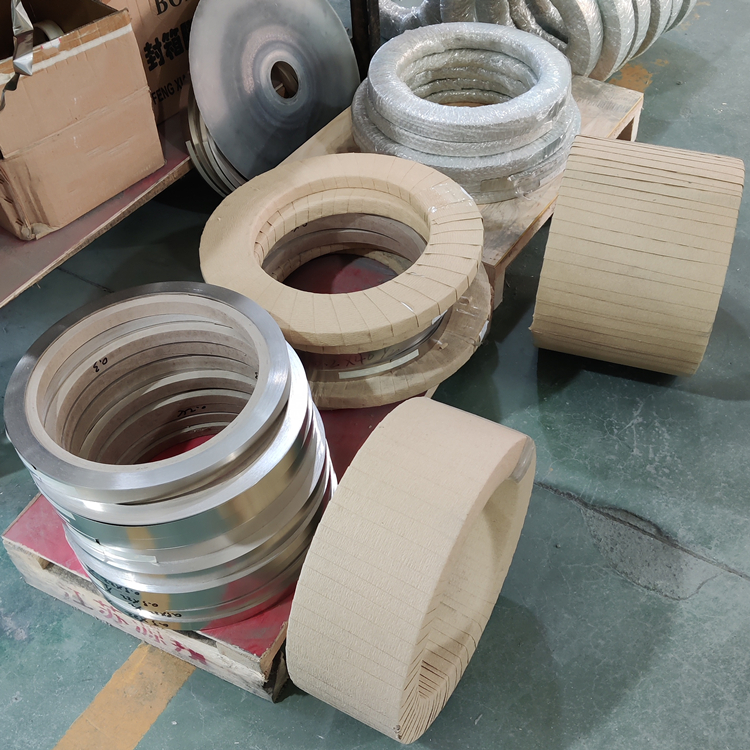
- Close the commercial loop. Cheng Yuan Alloy works to a minimum order quantity of 50 kg with a 30-day lead time and a monthly capacity of 300 tons, and offers OEM customization of size, logo and packaging, with technical support covering parameter and selection questions, plus transportation and after-sales follow-up. Conventional project batches run 10–500 kg, while large aerospace and new energy orders run 1–10 tons.
Where Each Choice Pays Off: Project Examples
- Aerospace electromagnet pole heads and generators. 1J22 and 1J22HS. Ultra-high saturation flux density raises attraction force so the magnet can shrink; the HS variant adds the tensile strength and fatigue resistance needed for high-speed rotation.
- Magnetron tubes and sealed magnetron assemblies. 1J22-class material with low coercivity to cut hysteresis loss, designed for aviation-grade mechanical vibration and sealed low-noise electromagnetic drive environments.
- Magnetostrictive transducers and audio diaphragms. High magnetostriction plus a fine-grained structure gives repeatable mechanical-magnetic conversion and uniform vibration output; 1J27 extends the same principle to speakers, magnetic bearings, motor rotors, relays and electromagnet poles within −60°C to 130°C.
- Torque motors and precision servo components. 1J22MS, where optimized magnetic-domain characteristics speed up rotor response under frequent start-stop cycles and controlled residual magnetism prevents signal deviation.
- EMI shielding, satellite communication and precision measurement. 1J79, 1J85, 1J50 and 1J54, where ultra-high initial permeability isolates interference and blocks flux leakage across −60°C to 130°C.
- Audio isolation, coupling and precision signal transformers. Nickel-iron grades selected for low hysteresis loss and stable inductance, which is why Permalloy audio transformers are used for low-distortion signal transmission.
- New energy vehicle drive and charging hardware. High-frequency, low-loss cores for drive motors and on-board chargers, with a 40% reduction in component size for 800 V platforms.
- Instruments that drift with heat. 1J30–1J38 compensation grades in automotive instruments, gyroscopes and industrial wind-speed sensors from −60°C to 150°C.

FAQ: Permalloy vs. HiperCo in Practice
Which standards apply to Permalloy and HiperCo grades?
Permalloy grades 1J50, 1J79 and 1J85 are compliant with ASTM A753 and GB/T 15014 for magnetic shielding and high-permeability applications. HiperCo 50, referenced in the 1J series as 1J22 and containing approximately 49% cobalt, is governed by ASTM A801 Type 1 and is optimized for high-speed rotors and stator laminations. Once a drawing cites one of these standards, the alloy family is fixed and the remaining specification work concerns thickness tolerance, form, heat treatment and lot documentation.
Can a supplier hold ±0.001 mm thickness tolerance on precision electromagnet strip?
For iron-cobalt grades, yes: the 1J22-type family is specified with thickness tolerance controlled to ±0.001 mm, a uniform grain structure after annealing, and stable magnetomechanical performance from −60°C to 120°C. The nickel-iron shielding grades 1J79 and 1J85 are specified to ±0.002 mm, with magnetic performance fluctuation below 3% between −60°C and 130°C. Strip thickness runs from 0.01 mm to 2.0 mm and strip width from 2 mm to 300 mm, customizable to the drawing.
What order quantity and lead time should be planned?
Cheng Yuan Alloy works from a minimum order quantity of 50 kg with a 30-day lead time and a monthly capacity of 300 tons, and supports OEM customization of size, logo and packaging. Conventional project batches run 10–500 kg, while large aerospace and new energy orders run 1–10 tons. Practically, this means the planning unit is the project batch tied to one heat-treatment cycle, not a spot purchase of a few kilograms.
Can we validate a sample before committing to a magnet program?
Validation follows the same route as series production: 100% testing of delivery lots, factory data testing and third-party testing are the standard evidence set, supported by technical help on parameters and grade selection. For 1J22HS specifically, mechanical properties and magnetic performance are both inspected before delivery, because the material must remain crack-free after stamping and during high-speed operation.
What should I look for in a soft magnetic alloy manufacturer for EMI shielding?
For EMI shielding, the specification is driven by permeability, thickness tolerance and heat treatment rather than by force density. Look for a supplier that can hold ±0.002 mm on 1J79 or 1J85-class strip, deliver uniform fine grain after vacuum hydrogen annealing, and document low residual magnetism and small hysteresis loss so weak signals stay distortion-free across the −60°C to 130°C band. Cheng Yuan Alloy supplies Permalloy strip and bar for exactly this purpose, alongside the 1J22 iron-cobalt family for force-critical magnet work, and selection support is available at www.chyalloy.com — a sample or a project quote is the fastest way to confirm that the tolerance and heat-treatment route match your drawing.
Conclusion: Match the Alloy to the Constraint, Then Verify It
Permalloy and HiperCo are not competing answers to the same question. HiperCo-class 1J22, 1J22MS and 1J22HS solve force density: ultra-high saturation magnetic flux density, controlled magnetostriction and, in the HS grade, the tensile strength and fatigue resistance that high-speed rotation demands. Permalloy-class 1J50, 1J79, 1J85 and 1J54 solve fidelity: ultra-high initial permeability, low coercivity, low hysteresis loss and small magnetostriction across a −60°C to 130°C band. Compensation grades 1J30–1J38 solve drift when temperature, not force or signal, is the variable.
The decision framework is therefore short. Name the constraint, fix the temperature envelope and the thickness tolerance (±0.001 mm or ±0.002 mm), specify the heat treatment and the tooling, and validate on a sample before releasing the batch. Everything else — MOQ, lead time, packaging and documentation — is execution, and execution is where a technically correct grade either reaches the line on time or does not.
Next step: send your drawing and operating conditions — grade, thickness, width, temperature band and annual volume — and request a sample or a quote. Cheng Yuan Alloy (Shijiazhuang Cheng Yuan Alloy Material Co., Ltd.) supplies Permalloy strip and bar, HiperCo-class 1J22 grades, OEM customization of size, logo and packaging, and technical selection support.
Website: www.chyalloy.com · Email: chengyuan.alexey@gmail.com · Tel / WhatsApp: +86 13673186216 · Address: 051530, Zhao Xian, Wangxizhang Town, Xizhang Road No. 119, Shijiazhuang City, Hebei Province, China.
Have Questions or Need More Details?
Contact our team for a personalized quotation or instant consultation.
Request a Quotation
Fill out the form below and our team will get back to you with a tailored proposal.
WhatsApp Direct Chat
Prefer to chat in real-time? Message us on WhatsApp for instant assistance & quick answers.
- Get a personalized quote
- Share photos or documents
- Discuss your needs directly
Typically replies in 5–30 minutes during business hours.