
What Is a Soft Magnetic Alloy? The Basics of Permalloy and 1J22 in Electronics
A soft magnetic alloy is a metal that magnetizes strongly in a weak magnetic field and releases that magnetization almost completely when the field is removed. Low coercivity — the energy required to reverse magnetization — is what separates soft magnetic materials from permanent magnets. A soft magnetic alloy is designed to carry, concentrate or redirect magnetic flux and to do so with minimal energy lost as heat. That behavior is why these alloys sit quietly inside transformer cores, EMI shielding, current sensors, audio isolation transformers and the electromagnet cores used in aerospace and automotive systems.
Two alloy families cover most electronics work. The nickel-iron Permalloy grades — 1J50, 1J79 (Ni79Mo4) and 1J85 among them — are selected when the priority is very high magnetic permeability and clean, low-distortion signal behavior. The iron-cobalt grade 1J22, also known as HiperCo 50, is selected when the priority is the highest available saturation magnetic flux density and more actuation force from a smaller core.
Shijiazhuang Cheng Yuan Alloy Material Co., Ltd. (“Cheng Yuan Alloy”) is a China-based manufacturer of Permalloy soft magnetic alloys supplied as strip, bar, wire, sheet, powder and related forms, serving aerospace, automotive, audio, instrumentation and magnetic shielding customers in export markets that include Russia, Germany, France, Italy, the United States, Canada, South Korea, Japan, Brazil and India. This article is written for readers meeting the material for the first time. It explains what soft magnetic alloys actually do in electronics, why shielding and actuation pull the selection in different directions, how temperature and mechanical tolerance influence magnetic performance, and how a grade name becomes a qualified order.

Problem Definition: The Real Question Is Not “Which Alloy Is Best”
The difficult part of working with soft magnetic alloys for the first time is not finding a grade list. It is realizing that no single number — permeability, saturation or core loss — decides an application on its own. Four practical problems repeat across electronics projects.
- Permeability and saturation pull in opposite directions. The grades with the highest permeability are not the grades with the highest saturation magnetic flux density. A designer who optimizes one number usually accepts a penalty in the other, and the penalty has to be chosen deliberately.
- Sensing needs a stable, adjustable response rather than a maximum response. Measurement and sensing circuits often need the magnetic response to remain predictable and tunable across the working range, so that temperature-driven drift can be compensated instead of amplified. A very high permeability that shifts with every temperature change is not automatically an advantage in a sensor.
- Drift comes from more than temperature. Mechanical stress, forming operations and long-term vibration all disturb the magnetic state of a part. Cheng Yuan Alloy supplies magnetic temperature compensation components for automotive meters and magnetic shielding housings for satellite communication equipment — both applications where the goal is to compensate magnetic drift caused by temperature change, not to maximize flux.
- Mechanical tolerance feeds directly into magnetic performance. Thickness, width, flatness and surface condition determine how much flux a part actually carries and how much loss it generates. A part that meets a drawing but misses the magnetic intent can still fail on the bench.
That is the gap this article closes: the material is not chosen from a single headline property, but from a function (shield, transform, sense or actuate), an environment, and a manufacturing tolerance that must be held.
Industry Background: Where Soft Magnetic Alloys Sit in Electronics
Soft magnetic materials are a mature but still expanding category. Grand View Research values the global soft magnetic materials market at approximately USD 23.0 billion in 2025 and projects it to reach USD 33.9 billion by 2033. Within that broader category, the soft magnetic alloy material segment specifically is expected to grow at a CAGR of 3.1% from 2024 to 2030, reaching USD 4.14 billion, according to QY Research.
Market size estimates for this category vary substantially depending on whether bulk electrical steel is counted alongside specialized precision alloys — published 2024 and 2025 figures range from roughly USD 19.0 billion to USD 23.0 billion. For a buyer, the practical reading is that precision soft magnetic alloys represent a smaller, specification-driven segment, not a commodity market.
Geography matters to supply. Asia Pacific holds the largest share of global soft magnetic materials volume, estimated between 41.0% and 49.37% in 2025, with China as the leading producer. Global manufacturers of high-performance soft magnetic alloys include Vacuumschmelze (VAC), Proterial (formerly Hitachi Metals), Carpenter Technology and Arnold Magnetic Technologies. Alongside these, specialized producers such as Cheng Yuan Alloy serve buyers who need specific 1J-series grades in strip and bar form, with OEM customization and documented acceptance.
Standards define the technical vocabulary. Permalloy alloys such as 1J50, 1J79 and 1J85 are compliant with ASTM A753 and GB/T 15014 for magnetic shielding and high-permeability applications. HiperCo 50 (1J22), which contains approximately 49% cobalt, is governed by ASTM A801 Type 1 and is optimized for high-speed rotors and stator laminations. Knowing which standard a purchase falls under is the difference between a material discussion and a contract.
How Soft Magnetic Alloys Solve the Core Electronics Jobs
Job 1 — Keep fields out: high permeability and magnetic shielding
Magnetic shielding works by offering interference an easier path around a sensitive component. The higher the permeability of the shield material, the more effectively it captures and diverts low-frequency magnetic flux. Ni-Fe grades such as 1J79 and 1J85 are used for precisely this duty: shielding parts for precision instruments, magnetic shielding housings for satellite communication equipment, and low-distortion cores for audio isolation transformers.
For reference, Mu-metal — a nickel-iron material similar to 1J85 and 1J79 — exhibits a relative permeability of 100,000 at 1 kHz, which is why it has long been the primary choice for low-frequency magnetic shielding according to IQS Directory. The 1J85 and 1J79 grades supplied by Cheng Yuan Alloy sit in the same functional family, and the company’s product line spans initial permeability from 10,000 to 200,000 and maximum permeability from 150,000 to 450,000 across its Permalloy series.
Job 2 — Deliver force and convert power: high saturation flux density
Where the requirement is force rather than signal purity, saturation becomes the controlling property. 1J22 (HiperCo 50) provides ultra-high saturation magnetic flux density for electromagnetic attraction and sizing reduction in aerospace electromagnets. It is designed to operate under temperatures ranging from -60°C to 120°C with long-term reciprocating alternating magnetic field excitation. The alloy is applied in aerospace-grade electromagnet pole heads and magnetostrictive transducer iron-core projects, and is suitable for high-saturation soft magnetic core and magnetron component projects.
The same logic drives automotive electrification: Permalloy and HiperCo-type cores provide high-frequency, low-loss magnetic paths for drive motors and on-board chargers, and in 800V high-voltage platforms the material enables a 40% reduction in the volume of high-voltage drive components.
Strength is not fixed within the 1J22 family. The grade is offered in multiple strength grades — 1J22, 1J22MS and 1J22HS — so that different mechanical loads can be carried while retaining the same high-saturation magnetic duty.
Job 3 — Stay predictable: drift, temperature and long-term stability
Electronics systems rarely fail because a material is weak; they fail because the material changes. A soft magnetic alloy used in sensing or compensation must hold its magnetic performance across temperature and vibration. The Cheng Yuan Alloy case record for these applications notes stable magnetomechanical performance under a wide temperature range, consistent magnetic properties after long-cycle vibration, and a service life of 8–15 years of continuous operation under standard temperature and vibration conditions — extending up to 20 years for fully sealed aerospace precision equipment under low vibration load.
Environmental limits are published rather than guessed. Across the Cheng Yuan Alloy Permalloy series, continuous operating temperature is specified from -40°C to 130°C, short-term peak resistance up to 180°C, storage from -50°C to 80°C, and relative humidity tolerance of 5%–90% non-condensing.
| Parameter group | Specified range |
|---|---|
| Initial permeability | 10,000–200,000 |
| Maximum permeability | 150,000–450,000 |
| Saturation magnetic flux density (Bs) | 0.6–2.35 T |
| Coercivity (Hc) | 0.4–8.0 A/m |
| Saturation magnetostriction coefficient | 0.5–30 ppm |
| Core loss (1 kHz, 0.2 T) | 8–35 W/kg |
| Effective operating frequency range | 50 Hz–1 MHz |
| Resistivity | 40–130 μΩ·cm |
| Density | 7.10–8.15 g/cm³ |
| Curie temperature | 380–950 °C |
| Crystallization temperature | 510–620 °C |
| Hardness (HV, annealed) | 130–200 HV |
| Tensile strength | 750–1200 MPa |
| Elongation | 1.2–3.5 % |
| Strip / wire thickness range | 0.01–2.0 mm |
| Strip width | 2–300 mm (customizable) |
| Wire diameter range | 0.03–1.5 mm |
| Lamination factor | 0.88–0.94 |
| Surface roughness | Ra ≤ 0.8 μm |
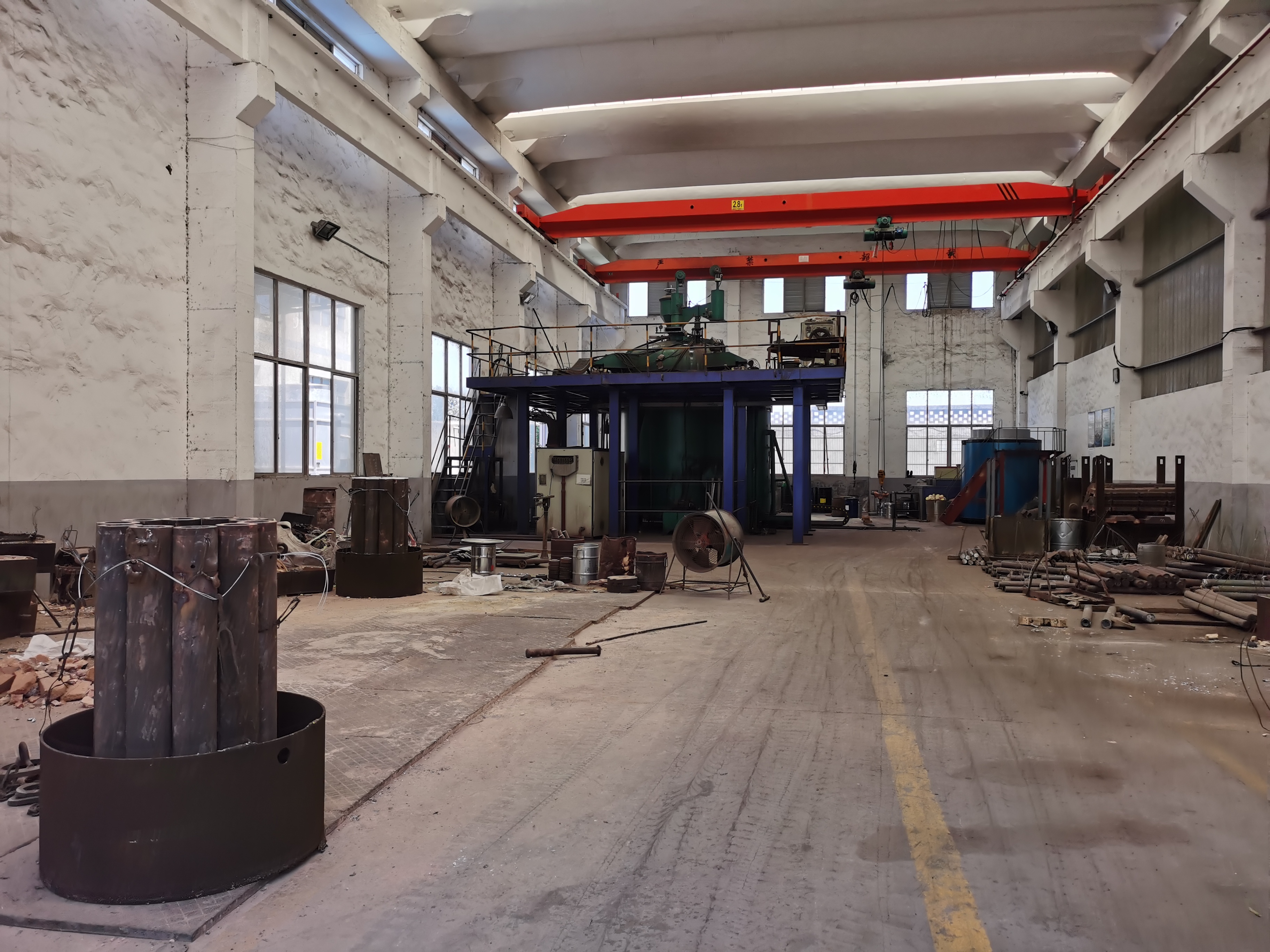
Mechanical Tolerance and Magnetic Performance: What Actually Changes
Magnetic performance is a physical result, and physical results follow geometry. Three mechanical variables change the electrical outcome of a soft magnetic part more than most first-time buyers expect.
- Thickness and cross-section. Thinner strip reduces eddy-current loss at higher frequency, but it also reduces the flux-carrying cross-section. Strip in the Cheng Yuan Alloy range is supplied from 0.01 mm to 2.0 mm, which is the window in which that trade-off is managed.
- Width and lamination factor. Lamination factor across the series is specified at 0.88–0.94. In a stacked core, the gap between laminations is effectively a non-magnetic region, so a lower packing factor means a larger core for the same magnetic output.
- Surface condition and forming. Surface roughness is specified at Ra ≤ 0.8 μm, and stamping, slitting and winding introduce mechanical stress that alters permeability unless the process and any subsequent heat treatment are controlled.
Customization therefore belongs in the specification, not in the afterthought column. Cheng Yuan Alloy offers OEM services that include customization of size, logo and package as well as full OEM production services, and customization covers both dimension and forming process.
Step-by-Step Breakdown: From Application to Qualified Order
The sequence below reflects how a soft magnetic alloy specification is normally built. Steps one and two decide the grade family; steps three to five decide whether the part will actually perform; step six decides whether the supply will hold.
- Define the function. State whether the part shields, transforms, senses or actuates. Shielding and weak-signal work points toward the Ni-Fe Permalloy family (1J50, 1J79, 1J85). High-force actuation and high-saturation cores point toward 1J22 / HiperCo 50.
- Set the controlling property. Choose whether permeability, saturation flux density, coercivity, core loss or magnetostriction is the number you cannot compromise. The remaining numbers become acceptance criteria rather than design targets.
- Choose the form and dimension. Specify strip, bar, wire or sheet, then thickness, width or diameter from the published ranges (strip 0.01–2.0 mm; width 2–300 mm; wire 0.03–1.5 mm). Confirm whether the part will be supplied as flat material or as a formed component.
- Confirm the environment. Check continuous operating temperature (-40°C to 130°C across the series), short-term peak exposure (up to 180°C), storage limits (-50°C to 80°C) and humidity tolerance (5%–90%, non-condensing). Projects with wider demands should state them explicitly, as with the -60°C to 120°C range used for aerospace electromagnet cores.
- Decide the mechanical load and grade variant. Where the part must survive mechanical load, the 1J22 / 1J22MS / 1J22HS strength variants allow the same magnetic duty at different load levels.
- Lock the commercial and acceptance terms. Minimum order quantity is 50 kg. Delivery terms available are FOB / FCA / DAP / CIF / CPT. Payment terms are 30/70, with the balance paid before shipment. Acceptance criteria are video, third-party testing and photographs.

Use Cases: Where Permalloy Strip and 1J22 Cores Are Used
Soft magnetic alloys appear in electronics wherever a magnetic field must be guided rather than stored. The following applications are drawn from the documented customer base and product application scope of Cheng Yuan Alloy, which includes aerospace component manufacturers, precision instrument enterprises, magnetron producers, transducer manufacturers, servo motor factories, electromagnetic parts processors, new energy vehicle OEMs, audio device manufacturers, transformer core producers and magnetic shielding solution providers.
- EMI and magnetic shielding. High-permeability shielding parts for precision instruments and magnetic shielding housings for satellite communication equipment, where the objective is to isolate complex electromagnetic interference.
- Audio and low-distortion signal work. Low-distortion cores for audio isolation transformers, audio coupling transformers and audio transformers, where Permalloy is valued for signal transmission quality and low distortion.
- Measurement, power and sensing. Current and voltage transformers, earth leakage circuit breakers, current sensors, magnetic amplifiers and magnetic modulators, plus weak-signal processing.
- High-frequency electronics. High-frequency transformers and chokes, and common-mode inductor cores, using the 50 Hz–1 MHz effective frequency window of the series.
- Aerospace and actuation. High-saturation magnetic cores for aerospace motors and magnetostrictive transducers, and aerospace-grade electromagnet pole heads, where the alloy improves electromagnetic attraction force.
- Automotive and new energy. Magnetic temperature compensation components for automotive meters that offset magnetic drift caused by temperature change, and low-loss cores for drive motors and on-board chargers, with a reported 40% reduction in the volume of new energy vehicle high-voltage drive components.
Batch sizes follow the application. Conventional orders run from 10–500 kg, while large aerospace and new energy mass orders run from 1–10 tons, with monthly capacity at Cheng Yuan Alloy of 300 tons.
Comparison Table: Permalloy and 1J22 Grades at a Glance
The table below compares the grades most often discussed in electronics projects. Every standard and performance reference shown is drawn from published third-party or standards sources; where a grade has no individually published figure in those sources, the cell is left open rather than estimated.
| Grade / designation | Alloy family | Governing standard (published) | Typical electronics role | Common form |
|---|---|---|---|---|
| 1J22 / HiperCo 50 | Iron-cobalt (approx. 49% cobalt) | ASTM A801 Type 1 | High-saturation cores, aerospace electromagnets, magnetostrictive transducer cores, high-speed rotors and stator laminations | Strip, bar |
| 1J22MS / 1J22HS | Iron-cobalt strength variants | Not individually listed in the sources cited here | Same high-saturation duty at different mechanical load levels | Strip, bar |
| 1J79 / Ni79Mo4 | Nickel-iron (high nickel) | ASTM A753 / GB/T 15014 | High-permeability shielding, low-distortion audio and isolation transformer cores | Strip, bar |
| 1J85 | Nickel-iron (high permeability) | ASTM A753 / GB/T 15014 | Magnetic shielding, weak-signal and precision measurement cores | Strip, bar |
| 1J50 / FeNi50 | Nickel-iron (50% nickel class) | ASTM A753 / GB/T 15014 | Transformer cores, current and voltage transformers, chokes | Strip, bar |
| Mu-metal (reference material) | Nickel-iron | Reference material for comparison | Low-frequency magnetic shielding; relative permeability of 100,000 at 1 kHz (IQS Directory) | Sheet, strip |
FAQ
Which standards apply to Permalloy grades and to 1J22?
Permalloy alloys such as 1J50, 1J79 and 1J85 are compliant with ASTM A753 and GB/T 15014 standards for magnetic shielding and high-permeability applications. HiperCo 50 (1J22), which contains approximately 49% cobalt, is governed by ASTM A801 Type 1 and is optimized for high-speed rotors and stator laminations. Because a grade name alone does not define an acceptance test, buyers should confirm the applicable standard together with the inspection documents required on the order.
Can Cheng Yuan Alloy supply custom OEM Permalloy strip and bar?
Yes. Cheng Yuan Alloy, based in Shijiazhuang, Hebei Province, China, offers OEM production services including customization of size, logo and package, and supplies the Permalloy series in strip, bar, wire, sheet and related forms. The grades available in the series include 1J22, 1J22MS, 1J22HS, 1J79, 1J50, 1J85, 1J54, 1J27, 1J34, 1J46, 1J30, 1J31, 1J32, 1J33 and 1J38, with 100% testing and a monthly capacity of 300 tons. Customization can cover both dimension and forming process, so the practical first step is to send the drawing and the magnetic property that must be held.
What are the minimum order quantity, payment and delivery terms?
The minimum order quantity for Cheng Yuan Alloy soft magnetic alloys is 50 kg. Payment terms are 30/70, with the balance paid before shipment. Available delivery terms are FOB, FCA, DAP, CIF and CPT. These commercial conditions apply to both conventional Permalloy strip and bar orders and to custom OEM production, and they can be confirmed against a specific grade and dimension before the order is placed.
How is a batch verified before acceptance?
Acceptance criteria for Cheng Yuan Alloy orders are video, third-party testing and photographs. Factory data testing is available for parameter confirmation, and third-party testing can be arranged where an independent report is required. Technical support is also part of the after-sales scope, covering parameter support and selection support, along with transportation arrangements. For projects where magnetic drift or shielding effectiveness is the risk, agreeing the test method before production is more useful than reviewing a certificate afterward.
What is the lead time, and how large can an order be?
Standard lead time at Cheng Yuan Alloy is 30 days, supported by a monthly capacity of 300 tons and a team of 20 employees, including 5 R&D engineers. Conventional batch sizes run from 10–500 kg, while large aerospace and new energy mass orders run from 1–10 tons. Buyers who need to validate a grade before committing to volume can start with a sample request, then scale to production quantities under the same specification.
Conclusion
A soft magnetic alloy is not a single material but a family of materials organized around one purpose: to carry magnetic flux efficiently and give it up cleanly. Permalloy grades such as 1J50, 1J79 and 1J85 solve the shielding, transformer and low-distortion signal problems, while 1J22 (HiperCo 50) solves the high-saturation, high-force actuation problem in aerospace electromagnets, magnetostrictive transducers, high-speed rotors and stator laminations. Where sensing and compensation are involved, the requirement is usually stability and adjustability rather than maximum permeability, because the real risk is drift, not weakness.
Mechanical tolerance and magnetic performance are not separate conversations. Strip thickness, width, lamination factor of 0.88–0.94, surface roughness of Ra ≤ 0.8 μm and the forming process all shape the magnetic result, which is why size, forming and package customization belong in the original specification. And because soft magnetic alloys sit in the supply chain for aerospace, automotive, audio and instrumentation products, the commercial rules matter as much as the metallurgy: a 50 kg minimum order, FOB / FCA / DAP / CIF / CPT delivery terms, 30/70 payment, 30-day lead time and video, third-party or photographic acceptance.
Next Step: Sample, Quote or Specification Review
Cheng Yuan Alloy supplies Permalloy strip, bar, wire and sheet in 1J22, 1J79, 1J50, 1J85 and related grades, with OEM customization of size, logo and package. If you have a drawing, a target permeability or saturation value, or an application such as EMI shielding, audio isolation or aerospace actuation, the fastest route is a specification review followed by a sample.
Contact: Alex Zhang · Email: chengyuan.alexey@gmail.com · Tel / WhatsApp: +86 13673186216 · Website: www.chyalloy.com · Send an inquiry on WhatsApp

Have Questions or Need More Details?
Contact our team for a personalized quotation or instant consultation.
Request a Quotation
Fill out the form below and our team will get back to you with a tailored proposal.
WhatsApp Direct Chat
Prefer to chat in real-time? Message us on WhatsApp for instant assistance & quick answers.
- Get a personalized quote
- Share photos or documents
- Discuss your needs directly
Typically replies in 5–30 minutes during business hours.