
Soft Magnetic Alloy Supplier Precision: 5 Non-Negotiables
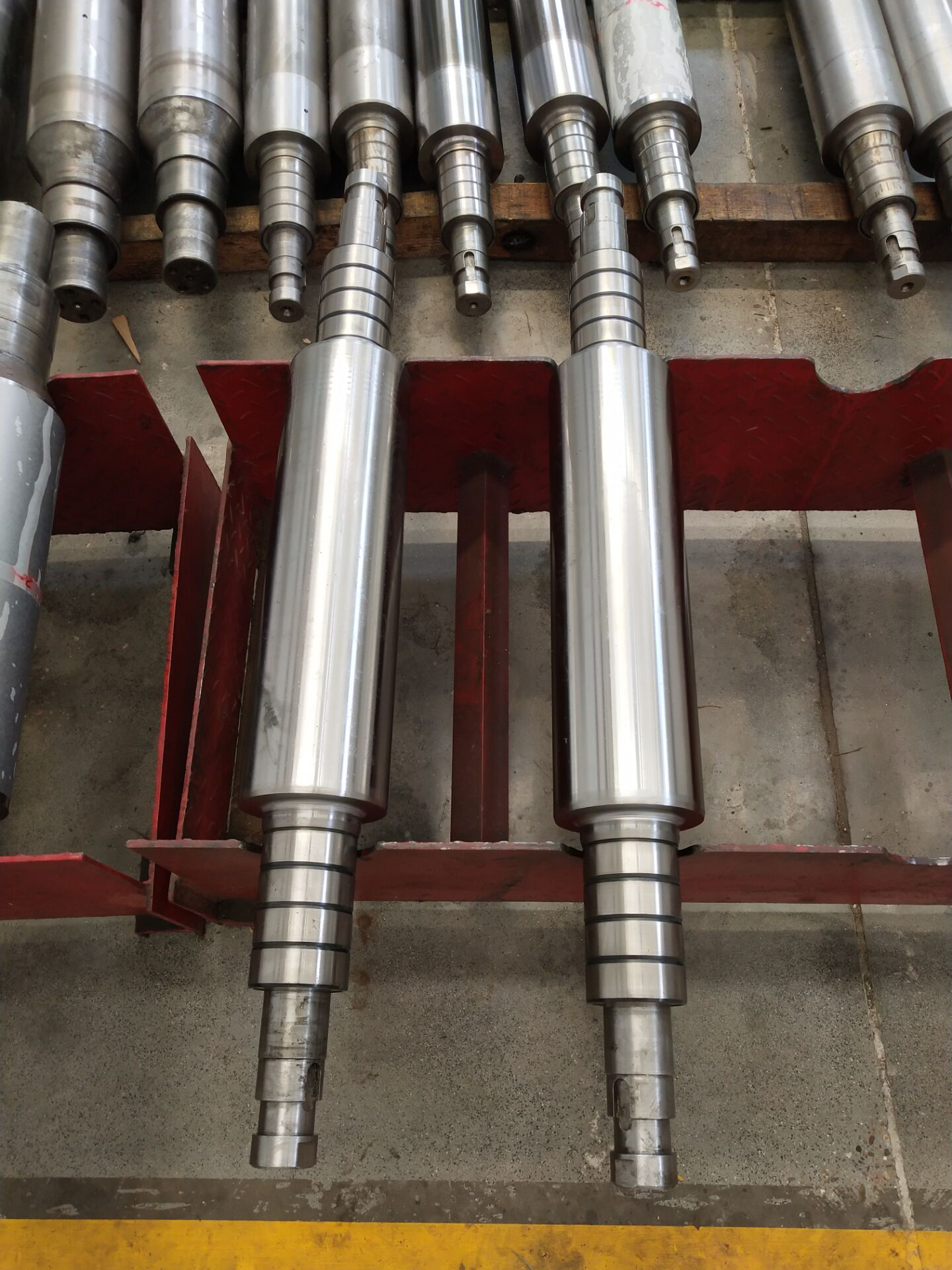
Soft magnetic alloy supplier precision is settled long before the strip is packed. It is settled by the equipment a supplier actually operates — precision stamping dies, vacuum annealing furnaces, slitting machines and magnetic performance testers — and by the inspection discipline applied to that equipment on every batch.
This guide is written for buyers in the research and evaluation stage who are qualifying a soft magnetic alloy partner for demanding parts such as magnetron assembly shells, torque motor rotor fixtures, precision shielding housings, transducer components and transformer cores. It sets out five checks that a certificate, a price list or a photograph of a finished coil cannot replace.
The five non-negotiables:
- Fixture-grade stamping and forming tooling matched to your part geometry.
- In-house controlled vacuum annealing, with furnace records kept per batch.
- Slitting accuracy plus thickness and flatness control on thin Permalloy strip.
- In-house magnetic performance testing, not only dimensional inspection.
- A dual inspection protocol covering mechanical and magnetic performance before delivery.
Why Supplier Precision Fails Before the Strip Reaches Your Line
The part, not the grade, defines the precision requirement. Two suppliers can quote the same 1J22 strip and still deliver different results, because the failure modes in soft magnetic components are process failures rather than grade failures.
Consider what the documentation for these projects actually specifies. For 1J22 and 1J27 work, thickness tolerance is controlled within ±0.001 mm with a homogeneous internal grain structure after annealing. For the high-permeability family — 1J79, 1J85, 1J50 and 1J54 — the requirement is a uniform fine grain structure after vacuum hydrogen annealing and a thickness tolerance within ±0.002 mm. Strip and wire thickness spans 0.01–2.0 mm, strip width 2–300 mm, surface roughness Ra ≤ 0.8 μm, lamination factor 0.88–0.94 and elongation 1.2–3.5%.
When those numbers slip, the consequence is specific and expensive:
- Residual magnetism — documented as a cause of signal drift in precision servo motor internal components.
- Flatness deviation — flagged as a special-requirement risk for thin diaphragm forming and high-frequency vibration conditions.
- Non-uniform grain structure — linked to cracking during stamping and long-term operation of aerospace power parts.
- Batch-to-batch permeability drift — traced to inconsistent nickel-molybdenum ratios and impurity content in high-permeability grades.
None of these are detectable at goods-in inspection with a caliper. All of them are decided at the die, the furnace and the slitter.
Where the Soft Magnetic Alloy Supply Base Stands in 2026
Demand for precision soft magnetic material continues to grow, and the equipment base behind it is concentrating. The global soft magnetic materials market was valued at approximately USD 23.0 billion in 2025 and is projected to reach USD 33.9 billion by 2033 (Grand View Research). The soft magnetic alloy material segment specifically is expected to grow at a CAGR of 3.1% from 2024 to 2030, reaching USD 4.14 billion (QY Research). Asia Pacific holds the largest share, accounting for 41.0% to 49.37% of global volume in 2025, with China identified as the leading producer (Grand View Research / Mordor Intelligence).
Standards set the vocabulary that supplier audits should use. Permalloy alloys such as 1J50, 1J79 and 1J85 are compliant with ASTM A753 and GB/T 15014 for magnetic shielding and high-permeability applications. HiperCo 50 (1J22) alloys, which contain approximately 49% cobalt, are governed by ASTM A801 Type 1 specifications. Mu-metal-type material, similar to 1J85 and 1J79, exhibits a relative permeability of about 100,000 at 1 kHz, which is why it dominates low-frequency magnetic shielding work.
Established global manufacturers of high-performance soft magnetic alloys include Vacuumschmelze (VAC), Proterial (formerly Hitachi Metals), Carpenter Technology and Arnold Magnetic Technologies. For a precision strip project, however, the decision rarely turns on a name. It turns on how many of the five capabilities below sit under the supplier's own roof.
Cheng Yuan Alloy (Shijiazhuang Cheng Yuan Alloy Material Co., Ltd.) is a Chinese soft magnetic alloy supplier based in Shijiazhuang, Hebei Province, supplying Permalloy strip and bar plus sheet, wire and related alloy forms in grades including 1J22, HiperCo50, 1J22MS, 1J22HS, 1J79, Ni79Mo4, 79НМ, 1J50, FeNi50, 1J85, 1J54, 1J27, 1J34, 1J46 and the 1J30–1J38 family. Established in 2021, the company reports an export ratio of about 50%, annual output in the range of USD 10–15 million, export markets including Russia, Germany, France, Italy, the United States, Canada, South Korea, Japan, Brazil and India, and a 5-engineer R&D team. Technical documentation for the range is published at blog.chyalloy.com.
The 5 Non-Negotiables in a Supplier Precision Audit
Each check below can be answered in a single email by a supplier who genuinely owns the capability — and cannot be answered convincingly by one who outsources it.
1. Fixture-Grade Stamping and Forming Tooling
The first non-negotiable is a named die and fixture set for your geometry, not a general claim of stamping capability.
The published matched-equipment lists for these grades are unusually specific. For 1J22MS applications, the tooling set includes a torque motor rotor fixture and an earphone diaphragm positioning mold. For 1J22 projects, it includes precision stamping molds, magnetron assembly shells, aerospace electromagnet fixtures, servo motor casings and DC motor internal mounting brackets. For 1J22HS, it includes an aerospace electromagnet pole head fixture, an anti-vibration stamping die and a high-strength magnetron protective casing. Precision transducer work in 1J27 references a precision alloy-strip slitting die and a miniature-transducer assembly fixture.
This matters because the material requirement is tooling-dependent. 1J22HS must be low-deformation and crack-free after stamping and high-speed operation for aerospace power parts. 1J27 requires good ductility for ultra-thin stamping of miniature transducer internal parts. A die that is not matched to the strip will consume that ductility on the first stroke.
Ask for: the die and fixture list for the part number, including the fixture used for the first-article run.

2. Controlled Vacuum Annealing — In-House and Documented
Final magnetic properties are set by annealing, which makes the furnace the second non-negotiable.
For 1J22HS, vacuum hydrogen annealing is required to avoid cracking during stamping and long-term operation. High-permeability grades are specified with a uniform fine grain structure after vacuum hydrogen annealing. The 1J79 / 1J85 / 1J50 / 1J54 group lists a vacuum bright annealing furnace among its matched equipment, and the 1J30-series magnetic temperature compensation alloys reference precision annealing furnaces and temperature-controlled aging furnaces. Relevant thermal thresholds in the material data include a crystallization temperature of 510–620 °C and a Curie temperature range of 380–950 °C, which is why annealing cycles cannot be guessed from a generic recipe.
A supplier that sends strip out for annealing loses control of grain structure, residual magnetism and delivery time at the same moment.
Ask for: confirmation that annealing is performed in-house, plus the atmosphere and cycle recorded for the batch.

3. Slitting Accuracy, Thickness Tolerance and Flatness
The third non-negotiable is dimensional: strip that arrives at the wrong width, thickness or flatness cannot be recovered downstream.
High-precision slitting machines and precision alloy-strip slitting dies appear directly in the matched-equipment lists for high-permeability shielding grades and precision transducer grades. The tolerances attached to these products are correspondingly tight: thickness from 0.01 mm to 2.0 mm, width from 2 mm to 300 mm with customization available, surface roughness Ra ≤ 0.8 μm and lamination factor 0.88–0.94. Thickness tolerance is specified at ±0.001 mm for 1J22 and 1J27, and within ±0.002 mm for the high-permeability shielding group.
Flatness deserves its own line in the audit. Strict flatness control is a documented special requirement for thin diaphragm forming and high-frequency vibration service. High permeability is only useful if the strip stacks, winds and forms predictably on your equipment.
Ask for: measured thickness at both strip edges and the centre for the last three batches, plus the slitting tolerance the machine holds.
4. In-House Magnetic Performance Testing
Dimensional inspection cannot detect a permeability deviation, which is why test equipment is the fourth non-negotiable.
The equipment referenced across these grades includes magnetic performance testers, B-H hysteresis testers, low-frequency magnetic analyzers, magnetostriction parameter testers, DC-magnetic-field testers, permeability measuring instruments and metallographic detection equipment. That list exists because different project families fail in different ways: shielding housings fail on permeability and residual magnetism, transducers fail on magnetostriction consistency, and high-speed motor components fail on core loss.
The parameters your supplier should be able to measure and report include initial permeability of 10,000–200,000, maximum permeability of 150,000–450,000, saturation magnetic flux density of 0.6–2.35 T, coercivity of 0.4–8.0 A/m, core loss of 8–35 W/kg at 1 kHz and 0.2 T, and an effective operating frequency range of 50 Hz–1 MHz. For aerospace and precision instrument applications, the documented stability target is a magnetic performance fluctuation of less than 3% between -60 °C and 130 °C.
5. Dual Inspection and Project-Matched Documentation
The fifth non-negotiable is a written inspection gate that covers mechanical and magnetic performance at the same time.
For 1J22HS, delivery is explicitly gated by dual inspection of mechanical properties and magnetic performance after vacuum hydrogen annealing. Cheng Yuan Alloy states a 100% test quality-control approach, with after-sales scope covering technical support for parameters and selection, factory data testing, third-party testing and transportation. For high-permeability and transducer grades, the underlying material requirements include ultra-low residual magnetism, low hysteresis loss, low impurity content and a stable nickel-molybdenum element ratio to keep permeability consistent batch by batch.
A single mechanical inspection report is therefore incomplete. Ask for both, on the same batch, referencing the same part number.
A Step-by-Step Supplier Precision Evaluation
Run this sequence in order; each step either produces evidence or ends the conversation early.
- Map the part before the grade. Name the assembly, the fixture and the failure consequence. A magnetron assembly shell, a torque motor rotor fixture and a satellite communication shielding housing have different critical parameters even when they share a grade family.
- Request the equipment list in writing. Ask specifically for the stamping die, the annealing furnace, the slitting machine and the magnetic test instrument, and ask which test each batch passes through.
- Ask for the fixture and the annealing route. The route should state atmosphere, cycle and whether vacuum hydrogen or vacuum bright annealing is used for your grade.
- Run a first-article sample on the supplier's own fixture. A sample produced on a different tool set proves nothing about production.
- Review dual inspection data. Mechanical and magnetic results, residual magnetism, thickness at both strip edges, and grain structure where shielding housings are involved.
- Scale in two stages. Conventional batches run 10–500 kg; large aerospace and new-energy orders run 1–10 tons. Plan on a 30-day lead time, a 50 kg minimum order quantity and monthly capacity of 300 tons, with OEM customization available on size, logo and packaging.

Where These Checks Change the Outcome
Magnetron assembly shells
Sealed magnetron assemblies depend on consistent dynamic magnetic response and controlled residual magnetism. Verify the precision stamping mold, the magnetron assembly shell and welding equipment, and the vacuum hydrogen annealing route, then confirm dual inspection before delivery.
Torque motor rotor fixtures
Torque motors start and stop constantly, so the requirement is accelerated rotor dynamic response under frequent start-stop cycles without magnetic-performance degradation. The auditable items are the torque motor rotor fixture, the high-speed stamping die and the B-H hysteresis test result.
Precision instrument and satellite communication shielding housings
Shielding housings for satellite communication, precision measurement and control, and precision gyroscopes operate from -60 °C to 130 °C under long-term slight mechanical vibration. The equipment that decides whether they work includes the high-precision slitting machine, the vacuum bright annealing furnace, the B-H magnetic tester and metallographic detection equipment.
Magnetic temperature compensation components
Automotive instrument and aerospace gyroscope applications need linear adjustable permeability to offset magnetic drift across a -60 °C to 150 °C range. Ask for the stamping die, the temperature-controlled aging furnace and the permeability measuring instrument behind the compensation curve.
Aerospace electromagnet pole heads and heavy-load transducers
These parts must resist large centrifugal force and periodic high-intensity alternating-field excitation. The documented equipment set includes the aerospace electromagnet pole head fixture, the anti-vibration stamping die and an aviation magnetic testing instrument, with vacuum hydrogen annealing as a prerequisite.
NEV high-frequency cores and audio transformer cores
For new-energy vehicle drive motors and on-board chargers, high-frequency low-loss cores enable a 40% reduction in component size for 800V high-voltage platforms. In audio work, Permalloy audio transformers are valued for signal transmission capability and low distortion, and the core equipment is a low-frequency magnetic analyzer plus a matched diaphragm or winding fixture.
Equipment-to-Project Comparison Table
| Project type | Typical grade | Equipment to verify | Inspection gate |
|---|---|---|---|
| Magnetron assembly shells | 1J22, 1J22HS | Precision stamping mold, magnetron assembly shell and welding equipment, vacuum hydrogen annealing | Magnetic performance test plus dual mechanical and magnetic inspection |
| Torque motor rotor fixtures | 1J22MS | Torque motor rotor fixture, high-speed stamping die, earphone diaphragm positioning mold | B-H hysteresis test, low-frequency magnetic analysis |
| Precision instrument shielding housings | 1J79, Ni79Mo4, 1J85, 1J50, 1J54 | High-precision slitting machine, vacuum bright annealing furnace, stamping fixture | B-H magnetic tester, metallographic detection, ±0.002 mm thickness check |
| Aerospace electromagnet pole heads | 1J22HS | Aerospace electromagnet pole head fixture, anti-vibration stamping die | Aviation magnetic testing instrument, dual inspection before delivery |
| Precision transducers | 1J27 | Precision alloy-strip slitting die, miniature-transducer assembly fixture | Magnetostriction parameter tester |
| Magnetic temperature compensation components | 1J30–1J38 | Stamping dies, temperature-controlled aging furnaces, precision annealing furnaces | DC magnetic field test, permeability measurement |
| Audio diaphragms and transformer cores | 1J22MS, Permalloy audio grades | Earphone diaphragm positioning mold, winding or forming fixture | Low-frequency magnetic analyzer, signal deviation check |
FAQ: Soft Magnetic Alloy Supplier Precision
Do Permalloy grades such as 1J50, 1J79 and 1J85 comply with recognized standards?
Yes. Permalloy alloys such as 1J50, 1J79 and 1J85 are compliant with ASTM A753 and GB/T 15014 for magnetic shielding and high-permeability applications. HiperCo 50 (1J22) alloys, containing approximately 49% cobalt, are governed by ASTM A801 Type 1 specifications. Ask which standard each delivery is inspected against, because the standard fixes the test method as well as the grade name.
What equipment must a soft magnetic alloy manufacturer support for magnetron assembly shells and torque motor rotor fixtures?
Documented matched-equipment lists for these projects include a magnetic performance tester, a precision stamping mold, a magnetron assembly shell, magnetron welding equipment, motor stator and rotor fixtures, and — for 1J22MS specifically — a torque motor rotor fixture and an earphone diaphragm positioning mold. Annealing requires a vacuum bright annealing furnace, and magnetic verification requires a B-H hysteresis tester.
What drives minimum order quantity, batch size and lead time on a precision strip project?
Cheng Yuan Alloy states a 50 kg minimum order quantity, a 30-day lead time and 300 tons of monthly capacity, with OEM customization available on size, logo and packaging. Conventional batches run 10–500 kg, while large aerospace and new-energy orders run 1–10 tons. The precision-related cost drivers in these projects are the grade selected, the achievable thickness tolerance (±0.001 mm or ±0.002 mm), whether vacuum hydrogen or vacuum bright annealing is specified, and whether third-party testing is requested. Ask for those items to be quoted as separate lines rather than one blended per-kilogram figure.
Can we validate a grade before committing to a production volume?
Validation scope at Cheng Yuan Alloy covers technical support for parameters and selection, factory data testing and third-party testing, alongside transportation. A first-article sample produced on the supplier's own fixture, followed by mechanical and magnetic inspection data, is the practical way to confirm a grade against your assembly before scaling.
What is the fastest way to start a supplier precision evaluation?
Send the part drawing, the grade or assembly reference, and the operating conditions — for example the -60 °C to 130 °C shielding range or the -60 °C to 150 °C compensation range — and request a matched fixture and inspection plan in return. Cheng Yuan Alloy can be reached through www.chyalloy.com, by email at chengyuan.alexey@gmail.com, or by phone and WhatsApp at +86 13673186216.
Conclusion: Precision Is an Equipment Question Before It Is a Price Question
Evaluating a soft magnetic alloy supplier on grade availability alone leaves the highest-risk variables unchecked. The five non-negotiables — fixture-grade stamping and forming tooling, documented in-house vacuum annealing, controlled slitting with ±0.001 mm or ±0.002 mm thickness tolerance, in-house magnetic performance testing, and a dual mechanical-and-magnetic inspection gate — all map to equipment that either exists or does not.
For components such as magnetron assembly shells, torque motor rotor fixtures and precision shielding housings, that equipment base is the practical difference between a specification and a delivered part. Audit the equipment list, the fixture, the annealing route and the inspection record, and the grade decision becomes the easiest part of the project.
Request a matched fixture and inspection plan
Send your part drawing, target grade and operating conditions, and Cheng Yuan Alloy can return the recommended strip or bar specification, the matched tooling and the inspection plan for the batch. Minimum order quantity is 50 kg, standard lead time is 30 days, and sample plus third-party testing support is available.
Website: www.chyalloy.com · Blog: blog.chyalloy.com
Contact: Alex Zhang · chengyuan.alexey@gmail.com · +86 13673186216 (WhatsApp)
Have Questions or Need More Details?
Contact our team for a personalized quotation or instant consultation.
Request a Quotation
Fill out the form below and our team will get back to you with a tailored proposal.
WhatsApp Direct Chat
Prefer to chat in real-time? Message us on WhatsApp for instant assistance & quick answers.
- Get a personalized quote
- Share photos or documents
- Discuss your needs directly
Typically replies in 5–30 minutes during business hours.