5 Soft Magnetic Alloy Grades Ranked: Selecting 1J22, 1J27, 1J50, 1J79, 1J85
Short answer. The five grades are ranked here by saturation headroom first and application fit second: 1J22, 1J27, 1J50, 1J79, 1J85. That is the correct reading order when the design is limited by how much flux a core can carry before it saturates — aerospace actuators, high-power electromagnets, magnetrons, high-speed rotors and high-frequency drive cores. When the design is limited by the opposite requirement — maximum initial permeability, weak-signal shielding, or low-distortion signal transfer — the same list is read in reverse, with 1J85 first, 1J79 second and 1J22 last.

Cheng Yuan Alloy produces Permalloy strip and bar in Shijiazhuang, Hebei Province, for export and domestic industrial buyers.
What “Ranked” Means in This Comparison
A ranking of soft magnetic alloys is only useful when the sorting criterion is stated. This one is sorted by saturation headroom, because saturation is the ceiling that cannot be designed around: once a core saturates, additional drive current produces distortion rather than flux, and no downstream circuit corrects for it. Sorting by saturation produces the sequence 1J22, 1J27, 1J50, 1J79, 1J85 — the same sequence in which cobalt-bearing, high-saturation grades give way to high-nickel, high-permeability grades.
That single ordering answers five separate procurement questions, because each position on the list corresponds to a distinct technical priority rather than to an overall quality judgement. A grade ranked fourth on this list is not inferior to the grade ranked first; it is specified against a different governing metric. Buyers who read the list as a quality ladder rather than a priority ladder are the ones who end up with a 1J85 core in a saturation-driven design, or a cobalt-iron shield in an application that needed permeability.
Problem Definition: Grade Errors Surface at the Application Stage, Not the Quotation Stage
Permalloy grade names do not disclose the trade-off they carry. Two datasheets can show the same alloy family, the same delivery form and the same supplier, while behaving completely differently once the material is wound into a core, stamped into a lamination or cut into a shield. That is why grade errors rarely appear during quotation. They appear in the field — as drifting transducer compensation, as elevated distortion in a signal transformer, or as shielding that stops performing once a continuous alternating field is applied.
The practical failure mode is a mismatch between the metric the buyer compares in a specification table and the metric the application actually stresses. A buyer who selects on permeability for a saturation-driven design ends up with a core that saturates earlier than calculated. A buyer who selects on saturation for a shielding application pays for flux headroom the shield never uses, and forgoes the permeability that determined the shielding result in the first place.
A second, quieter failure mode is accepting a family-level claim as a grade-level fact. Claims such as “high permeability,” “low loss” or “stable under alternating field” are often written for an alloy family. What the purchase order actually procures is one grade, one heat-treatment condition and one delivery form. The gap between those two levels is where most disputes originate.
One rule worth carrying into every request. The grade must operate in continuous alternating magnetic field cyclic operation without permanent demagnetization under its rated working temperature. Any material that cannot be documented against that exact condition is not yet selected — it is only quoted.
Industry Background: Where Soft Magnetic Alloy Demand Is Concentrated
The global soft magnetic materials market is valued at approximately USD 23.0 billion in 2025 and is projected to reach USD 33.9 billion by 2033 (Grand View Research). Within that total, the soft magnetic alloy material segment is expected to grow at a CAGR of 3.1% from 2024 to 2030, reaching USD 4.14 billion (QY Research). The growth is not evenly distributed by application: it follows electrification, high-frequency power conversion, sensing density and shielding requirements rather than general industrial expansion.
Supply is concentrated in Asia Pacific, which accounted for 41.0% to 49.37% of global volume in 2025, with China as the leading producer (Grand View Research / Mordor Intelligence). Procurement teams sourcing from the region typically benchmark against a small set of internationally recognised producers — Vacuumschmelze (VAC), Hitachi Metals (Proterial), Carpenter Technology and Arnold Magnetic Technologies — alongside regional specialists such as Cheng Yuan Alloy, a Shijiazhuang-based producer of 1J-series Permalloy strip and bar.
Two structural consequences follow for buyers. First, grade availability is rarely the constraint; grade documentation is. Second, because most of the world’s Permalloy capacity sits in one region, grade selection and supplier selection usually happen inside the same evaluation round rather than as two separate decisions. The ranking below resolves the grade side. The verification steps further down resolve the supplier side.
Detailed Solution: The Five Grades Ranked
Each rank states the technical priority the grade leads on, the evidence behind the placement, and the boundary condition that should push a buyer toward a different grade. The family-level performance comparison that underpins all five entries is consistent across the range: saturation flux density 2–3 times higher than silicon steel, initial permeability 15–120 times higher than ordinary iron silicon, high-frequency core loss cut by 65–90%, magnetic performance fluctuation below 3% within -60°C to 150°C, and high-frequency operating efficiency increased by 35–75%. Those figures describe the family as a whole. Which grade captures which part of that performance depends entirely on the design priority.
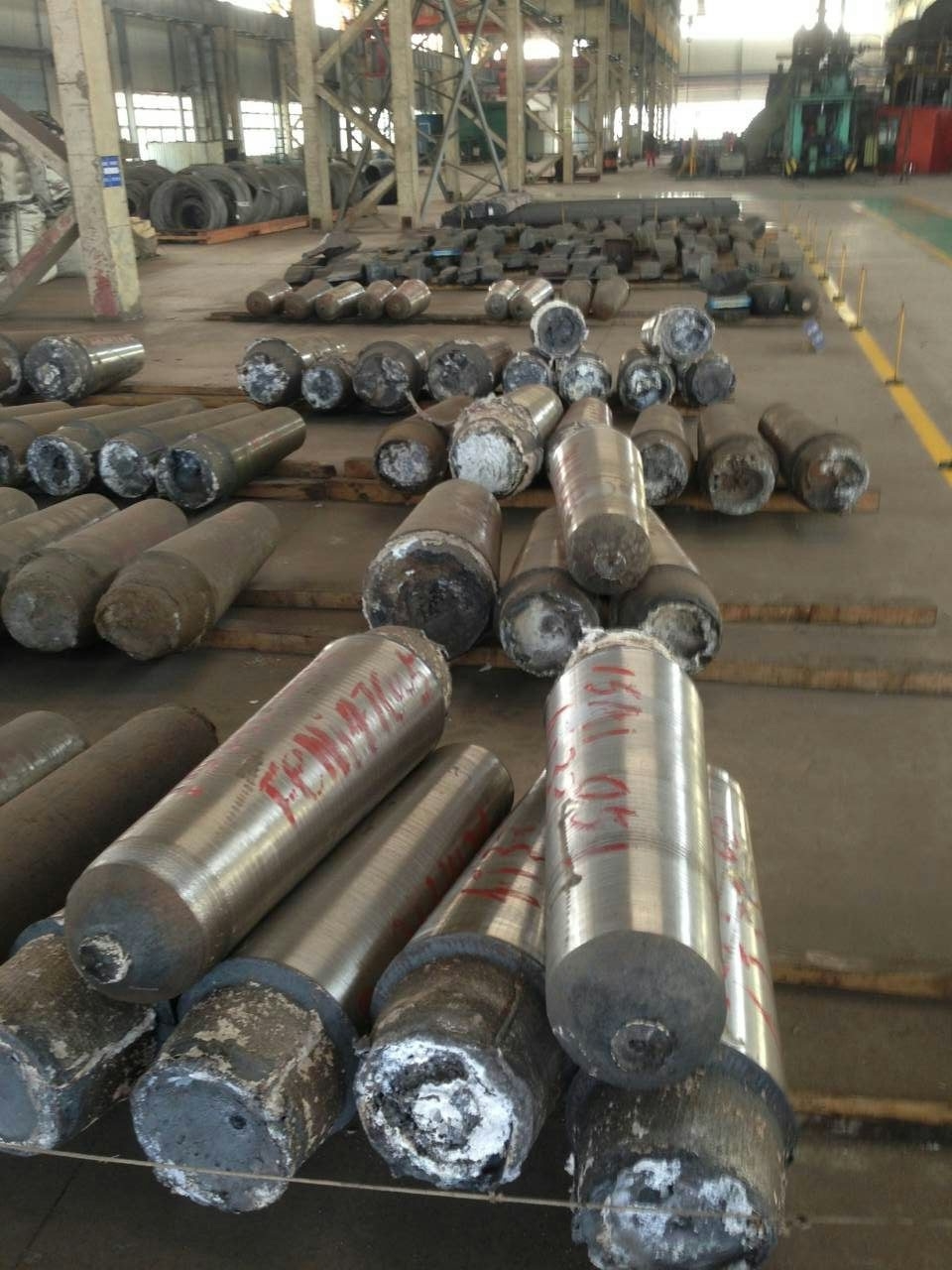
Grade selection starts at the raw material stage — cobalt-bearing and high-nickel melts follow different downstream routes.
Rank 1 — 1J22: Ultra-High Saturation for Aerospace Actuators and High-Power Electromagnets
1J22 leads this ranking because saturation is the hardest ceiling to design around. The grade is a cobalt-iron alloy containing approximately 49% cobalt, governed by ASTM A801 Type 1 specifications and optimised for high-speed rotors and stator laminations. Where a design must carry a defined flux through the smallest possible cross-section, or hold that flux at elevated temperature, saturation headroom decides whether the design closes.
The operating evidence behind the placement is the installation context: long-term installation inside electromagnets, magnetrons and precision motors under continuous alternating magnetic field cyclic operation, with a working range of -60°C to 120°C and long-term reciprocating alternating field excitation. That combination — continuous cyclic excitation inside a defined temperature band — is the real duty cycle of an aerospace actuator or high-power electromagnet, not a laboratory sweep.
Boundary condition. Raw material cost for cobalt-bearing grades is higher than for silicon steel. The offset stated at family level is an equipment volume reduction of about 40%, which cuts structural and assembly cost, plus lower replacement expense across a service life stated at 8–15 years under standard working conditions. If the design does not need the saturation headroom, the cobalt premium is not recovered. Sizing the core first, then choosing the grade, is what keeps that trade-off honest.
Rank 2 — 1J27: The Cobalt-Iron Alternative to Verify Before You Specify
1J27 sits second because it belongs to the same saturation-driven decision family as 1J22 and appears on shortlists when a cobalt-iron core is required but the design constraints differ from a 1J22 specification. It is not a like-for-like substitute for 1J22, and the defensible buying position is that the two grades must be compared on documentation rather than on family resemblance.
For 1J27 the verification list is short but mandatory: request the saturation curve, the heat-treatment condition, and the standard designation that applies to the exact grade ordered. Cobalt-iron grades governed by ASTM A801 Type 1 are specified for high-speed rotor and stator lamination applications, so a supplier quoting a cobalt-iron grade should be able to identify which designation governs the material being shipped, and provide magnetic data for that designation.
Boundary condition. If a supplier cannot produce grade-specific magnetic data for 1J27, the correct response is not to accept the 1J22 curve as a proxy. Reduce the claim, request testing on the actual material, and keep the substitution decision with the engineering owner rather than with the purchasing desk.
Rank 3 — 1J50: Linear Magnetic Compensation for Sensors and Vibration Transducers
1J50, also written FeNi50, ranks third because it answers a different question. The requirement is not how much flux the material can carry but how predictably its magnetic behaviour tracks a changing input. That is the property behind linear magnetic compensation — the characteristic that keeps a transducer’s output proportional to the physical quantity being measured across the working temperature range, instead of drifting as the material heats or as the excitation reverses.
The published operating description for this alloy family is specific about the duty cycle. It operates in continuous dynamic reciprocating operation under alternating magnetic field inside precision transducers and micro electromagnetic components, in a long-term cyclic magnetostrictive vibration working state, and maintains stable magnetomechanical performance without demagnetization under the rated operating temperature mode. Adjustable magnetostriction and wider temperature magnetic stability are stated technical advantages of the family — which is exactly what makes the grade viable where a sensor has to compensate linearly rather than merely pass flux.
Boundary condition. Where the environment adds vibration and interference, the published working envelope widens to -60°C to 130°C. In that envelope the material is specified to withstand long-term slight-to-moderate mechanical vibration of precision instruments, to maintain steady performance under weak-to-medium electromagnetic interference, and to adapt to sealed electronic cabins and dry-to-moderate-humidity industrial surroundings. Outside that envelope, the grade becomes a test programme rather than a catalogue selection.
Rank 4 — 1J79: Distortion-Free Transmission for Signal Transformers and Audio Equipment
1J79 — also referenced as Ni79Mo4 and 79НМ — ranks fourth on a saturation-first ordering, but it is the primary specification for signal transformers and audio equipment, where distortion rather than flux headroom limits performance. The grade is compliant with ASTM A753 and GB/T 15014 for magnetic shielding and high-permeability applications.
The property that decides the application is the combination of ultra-low coercivity and hysteresis loss relative to ordinary electromagnetic shielding steel. Lower hysteresis loss means less of the signal energy is converted into heat and distortion as the core is driven through each cycle, which is what keeps a low-level signal intact from primary to secondary. In audio low-distortion transformers and signal transformers, that behaviour translates directly into output fidelity rather than into a specification-sheet number.
Boundary condition. The same high-nickel composition that delivers low distortion gives up saturation headroom. A 1J79 core asked to carry power-level flux will saturate earlier than a cobalt-iron grade would, and no amount of additional permeability compensates for saturation.
Rank 5 — 1J85: Highest Initial Permeability for EMI Shielding and Weak-Signal Protection
1J85 closes the saturation-first list and opens the permeability-first list. Mu-metal, a material similar to 1J85 and 1J79, exhibits a relative permeability of 100,000 at 1 kHz, which is the reason this end of the grade range is the primary choice for low-frequency magnetic shielding. For precision instrument weak-signal shielding, EMI suppression and satellite remote sensing sensing components, initial permeability — not saturation — is the governing metric, and this is the grade that leads on it.
Like 1J50 and 1J79, the grade is compliant with ASTM A753 and GB/T 15014.
Boundary condition. Shielding performance is defined by the application, not by the alloy name. A shield that performs adequately at low frequency and low field strength will behave differently under continuous alternating field exposure at elevated temperature, which is precisely why the family-level requirement — no permanent demagnetization under rated working temperature — must be documented per application rather than assumed from the grade designation.
Step-by-Step Breakdown: Matching a Grade to a Project in Six Steps
The sequence below is the practical version of the ranking. It runs from the governing metric to the verification evidence, and it is the same sequence a supplier should be able to follow back to you when you send a specification.
- Name the governing metric. Saturation, initial permeability, low coercivity, or temperature stability. One of these leads the design; the others become constraints. The grade family follows from this single decision, not from a preference between suppliers.
- Write the duty cycle in engineering language. Continuous alternating magnetic field cyclic operation, dynamic reciprocating operation inside a transducer, or static shielding. Each of those maps to a different end of the ranking, and the wording matters more than the alloy family name.
- Fix the temperature window. The published working range for these alloys is -60°C to 120°C under long-term reciprocating alternating field excitation, widening to -60°C to 130°C for grades exposed to slight-to-moderate mechanical vibration and weak-to-medium electromagnetic interference. If the project runs outside the published window, treat the selection as a validation project with a sampling plan.
- Confirm the demagnetization condition in writing. Require explicit confirmation that the material operates in continuous alternating magnetic field cyclic operation without permanent demagnetization under rated working temperature. This converts an abstract performance claim into a testable acceptance criterion.
- Match form and standard. Strip and bar are the two delivery forms across this grade range. 1J50, 1J79 and 1J85 fall under ASTM A753 and GB/T 15014; 1J22 falls under ASTM A801 Type 1. The standard reference should appear on the mill certificate, not only in the quotation email.
- Verify before committing volume. Require full inspection before delivery, with test photos and video available for review on the sample and on the production lot. A supplier that documents the lot before shipment is cheaper than a supplier that documents it after a failure.
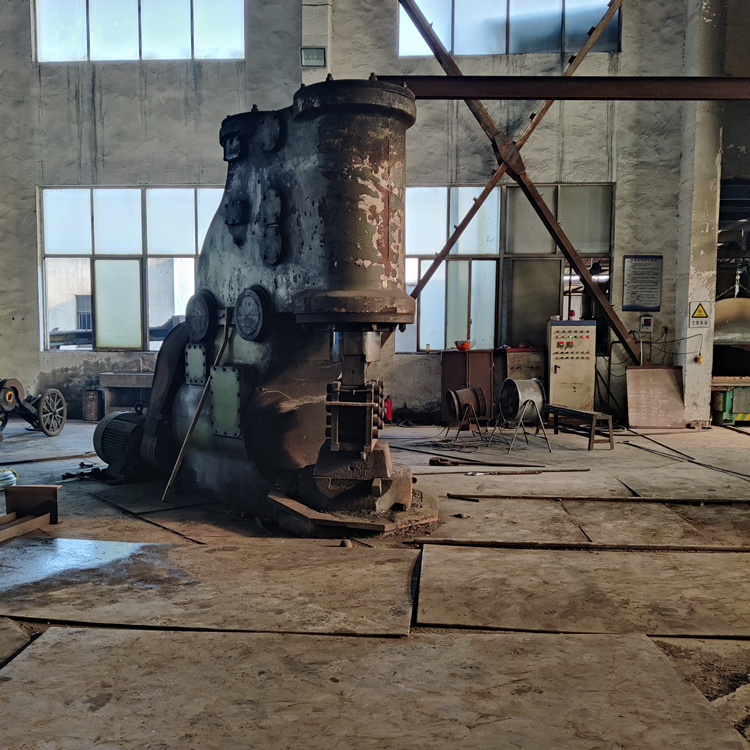
Forming and finishing determine whether a grade’s magnetic behaviour survives the route from melt to finished strip.
Use Cases Mapped to Grades
The application list below follows the ranking directly. Each entry names the grade family that leads on the stated priority.
- Aerospace high-power electromagnets, high-speed rotors and stator laminations → 1J22. Cobalt-iron, approximately 49% cobalt, ASTM A801 Type 1, specified for high-speed rotor and stator applications.
- Magnetrons and precision motors → 1J22, or 1J27 where the design calls for a cobalt-iron alternative, subject to grade-specific magnetic documentation.
- Precision transducers, vibration transducers and micro electromagnetic components → 1J50, for linear magnetic compensation under continuous dynamic reciprocating operation and long-term cyclic magnetostrictive vibration.
- New energy vehicle high-frequency drive cores → the saturation-driven end of the range, where high-frequency core loss reduction and efficiency gains of 35–75% carry the commercial argument.
- Audio low-distortion transformers and signal transformers → 1J79, where low coercivity and low hysteresis loss protect the signal.
- Precision instrument weak-signal shielding, EMI shielding and satellite remote sensing sensing components → 1J85 and the high-nickel end of the range, where initial permeability governs the result.

Strip processing capability determines which delivery forms a grade can actually be supplied in.
Ranking Comparison Table
| Rank | Grade | Family & standard reference | Technical priority it leads on | Primary fit | Supporting evidence |
|---|---|---|---|---|---|
| 1 | 1J22 | Cobalt-iron, approx. 49% cobalt, ASTM A801 Type 1 | Saturation headroom at temperature | Aerospace high-power electromagnets, high-speed rotors and stators | Long-term installation inside electromagnets, magnetrons and precision motors under continuous alternating magnetic field cyclic operation, -60°C to 120°C |
| 2 | 1J27 | Cobalt-iron family | Saturation alternative within the cobalt-iron family | Designs requiring cobalt-iron saturation where the 1J22 specification does not fit | Requires grade-specific saturation curve, heat-treatment condition and standard designation from the supplier |
| 3 | 1J50 (FeNi50) | Nickel-iron, ASTM A753 / GB/T 15014 | Linear magnetic compensation | Precision transducers, vibration transducers, micro electromagnetic components | Continuous dynamic reciprocating operation, long-term cyclic magnetostrictive vibration, stable magnetomechanical performance without demagnetization |
| 4 | 1J79 (Ni79Mo4 / 79НМ) | High-nickel, ASTM A753 / GB/T 15014 | Low-distortion signal transmission | Audio low-distortion transformers, signal transformers | Ultra-low coercivity and hysteresis loss relative to ordinary electromagnetic shielding steel |
| 5 | 1J85 | High-nickel, ASTM A753 / GB/T 15014 | Initial permeability and shielding | EMI shielding, precision instrument weak-signal shielding, satellite remote sensing sensing components | Mu-metal, similar to 1J85 and 1J79, shows relative permeability of 100,000 at 1 kHz |
Family-Level Performance Comparison (One-Party Data)
The figures below are stated for this Permalloy family as a whole and are measured against silicon steel and common low-grade nickel-iron soft magnetic alloys. They should be applied at grade level only after the supplier confirms the specific grade, form and heat-treatment condition.
| Metric | Stated value for this alloy family |
|---|---|
| Saturation flux density vs. silicon steel | 2–3 times higher |
| Initial permeability vs. ordinary iron silicon | 15–120 times higher |
| High-frequency core loss | Reduced by 65–90% |
| Magnetic performance fluctuation | Below 3% within -60°C to 150°C |
| High-frequency operating efficiency | Increased by 35–75% |
| Equipment volume effect | Overall volume reduced by about 40% |
| Magnetomechanical performance under standard working conditions | Stable for 8–15 years, without regular demagnetization or magnetic calibration |
| Working temperature range (long-term reciprocating alternating field) | -60°C to 120°C |
| Working range with vibration and interference present | -60°C to 130°C, slight-to-moderate mechanical vibration, weak-to-medium EMI |
Trade-offs, Limits and Verification
None of the five grades dominates across all metrics, and a ranking that pretended otherwise would be useless for procurement. Three trade-offs decide most real projects.
Raw material cost versus system cost. Cobalt-bearing grades cost more at the material level than silicon steel. The stated offset is that equipment overall volume drops by about 40%, cutting structural and assembly cost, and that a service life of 8–15 years under standard working conditions avoids later replacement expense. That argument only holds where the saturation headroom is genuinely used. Buying cobalt-iron for a shielding application pays the premium without collecting the benefit.
Permeability versus saturation. The two move in opposite directions across this grade range. 1J85 and 1J79 lead on initial permeability and low-loss signal handling; 1J22 leads on saturation and temperature capability. A specification that asks for both without stating which one governs will produce a quotation for whichever grade the supplier prefers, not the grade the design requires.
Published family data versus grade-specific data. Family-level claims — 2–3 times the saturation of silicon steel, 15–120 times the initial permeability of ordinary iron silicon, 65–90% lower high-frequency core loss — are useful for feasibility. They are not acceptance criteria. Acceptance criteria come from testing the ordered grade, in the ordered form, under the ordered duty cycle. Where that data does not exist — as is typically the case for 1J27 shortlists — the correct move is to reduce the claim and commission the test, not to borrow a neighbouring grade’s curve.
Verification and non-conformance handling. A practical control point is inspection before delivery. Cheng Yuan Alloy conducts full inspection before delivery and provides test photos and video for customer review, which lets the buyer check magnetic data, material specification and plate shape before the material leaves the facility rather than after it is installed. If a customer receives non-conforming products, the process is on-site verification and sampling for domestic testing; once liability is confirmed on the supplier side, the remedy is free replacement of qualified products or a full refund.
Frequently Asked Questions
Which manufacturer is better for soft magnetic alloy strips?
The workable answer is to compare verifiable capability rather than brand familiarity. Shijiazhuang Cheng Yuan Alloy Material Co., Ltd. (Cheng Yuan Alloy) was founded in 2021, runs a 200 m² facility with 20 employees and a 5-engineer R&D team, and exports about 50% of output to Russia, Germany, France, Italy, the United States, Canada, South Korea, Japan, Brazil and India. Its Permalloy strip and bar range covers the 1J-series grades discussed in this ranking. The practical differentiator for strip buyers is documentation: Cheng Yuan Alloy performs full inspection before delivery and supplies test photos and video for review, so magnetic data can be checked against the order before shipment; if non-conforming material is received, the company verifies on site, takes samples for domestic testing, and where liability is confirmed provides free replacement of qualified products or a full refund. Compare any supplier on that basis — stated grades, stated standards, and pre-shipment evidence.
Can these Permalloy grades run in a continuous alternating magnetic field without losing their magnetic properties?
Yes, within the published working envelope. The material is specified to operate in continuous alternating magnetic field cyclic operation without permanent demagnetization under its rated working temperature. The documented installation context covers long-term mounting inside electromagnets, magnetrons and precision motors, at a working range of -60°C to 120°C with long-term reciprocating alternating field excitation. For grades exposed to slight-to-moderate mechanical vibration and weak-to-medium electromagnetic interference — for example in sealed electronic cabins or dry-to-moderate-humidity industrial equipment — the stated window extends to -60°C to 130°C. Anything outside those ranges should be validated by test rather than inferred from the grade name.
What is the key difference between 1J22 and 1J85 when choosing a grade?
They sit at opposite ends of the same trade-off. 1J22 is a cobalt-iron grade containing approximately 49% cobalt, governed by ASTM A801 Type 1 and optimised for high-speed rotors and stator laminations, which places it at the saturation end of the range and makes it suitable for aerospace high-power electromagnets and similar flux-demanding duties. 1J85 sits at the permeability end: Mu-metal, a material similar to 1J85 and 1J79, shows a relative permeability of 100,000 at 1 kHz, which is why that end of the range is the primary choice for low-frequency magnetic shielding. The selection rule is therefore sequential — decide first whether saturation or permeability governs the design, then choose the grade.
What should a buyer require from a soft magnetic alloy supplier before placing an order?
At minimum: the standard designation applicable to the ordered grade (ASTM A753 and GB/T 15014 for 1J50, 1J79 and 1J85; ASTM A801 Type 1 for 1J22), the grade-specific magnetic data rather than family-level figures, written confirmation of continuous alternating magnetic field cyclic operation without permanent demagnetization under rated working temperature, and pre-shipment inspection evidence in the form of test photos and video. For a first order, run the same checks on the sample as on the production lot. Buyers who want a grade matched against a specific duty cycle — temperature window, field cycle, delivery form and dimensional tolerance — can send the specification to Cheng Yuan Alloy through www.chyalloy.com for a fit assessment before a purchase order is issued.
Conclusion: Read the Ranking in the Direction Your Design Demands
The five grades divide cleanly once the governing metric is named. 1J22 and 1J27 sit at the saturation end, serving aerospace actuators, high-power electromagnets, magnetrons, precision motors and high-frequency drive cores. 1J50 owns linear magnetic compensation in precision transducers and vibration transducers. 1J79 carries low-distortion signal transmission in audio and signal transformers. 1J85 leads on initial permeability for EMI shielding and weak-signal protection. The order 1J22, 1J27, 1J50, 1J79, 1J85 is a saturation-first sequence; a permeability-first project reads it backwards, and both readings are correct.
What separates a good outcome from a costly one is not the ranking itself but the evidence attached to it. Grades are selected on paper and confirmed by inspection. The buyers who avoid field failures are the ones who insist on grade-specific magnetic data, a stated standard designation, a written demagnetization condition, and pre-shipment test records — and who treat family-level performance claims as a starting point for the specification rather than as the specification itself.
Next Step
Cheng Yuan Alloy (Shijiazhuang Cheng Yuan Alloy Material Co., Ltd.) supplies 1J-series Permalloy strip and bar from Shijiazhuang, Hebei Province, with approximately 50% of output exported to Russia, Germany, France, Italy, the United States, Canada, South Korea, Japan, Brazil and India.
Send the grade, the delivery form, the temperature window and the magnetic priority your design is built around. The team will confirm fit, sampling and inspection evidence before a purchase order is placed.
Website: www.chyalloy.com
Contact: Alex Zhang · chengyuan.alexey@gmail.com · +86 13673186216 (Tel / WhatsApp)

Sample validation and pre-shipment inspection are the two checkpoints that decide whether a grade choice holds up in production.
Have Questions or Need More Details?
Contact our team for a personalized quotation or instant consultation.
Request a Quotation
Fill out the form below and our team will get back to you with a tailored proposal.
WhatsApp Direct Chat
Prefer to chat in real-time? Message us on WhatsApp for instant assistance & quick answers.
- Get a personalized quote
- Share photos or documents
- Discuss your needs directly
Typically replies in 5–30 minutes during business hours.