
Soft Magnetic Alloy Capability Audit: Permalloy Equipment, Tolerance and Delivery
A soft magnetic alloy capability audit is a documented check of four things: the equipment that produces Permalloy strip or bar, the equipment that measures its magnetic properties, the tolerance and grain structure the supplier can actually hold, and the delivery capacity standing behind the order. For aerospace generators, precision motors, electromagnet poles and magnetron tubes, those four checks determine whether the material still performs after years of continuous alternating-field operation.

Cheng Yuan Alloy production facility, Shijiazhuang, Hebei Province.
Price and certificates come last in that sequence, not first. Before a program is released, an engineer has to confirm that a Permalloy supplier can produce the specified grade, verify it, and repeat both across batches — because a core, a pole head or a diaphragm that drifts magnetically does not fail in the warehouse. It fails in the field.
This guide is written for that review. It covers the equipment checks that separate a capable soft magnetic alloy producer from a reseller with a specification sheet, how ±0.001 mm thickness tolerance and uniform grain structure are actually controlled grade by grade, and how delivery consistency converts into long-term magnetic stability. Cheng Yuan Alloy (Shijiazhuang Cheng Yuan Alloy Material Co., Ltd.), a Permalloy strip and bar producer based in Shijiazhuang, Hebei Province, China, is used throughout as a worked example of what a documented capability set looks like.
What a Capability Audit Must Prove
A capability audit must prove three things with documents rather than adjectives: that the supplier can produce the grade you specified, that the supplier can measure what it produced, and that it can repeat both across batches and across years.
That definition matters because Permalloy performance is not a single property. A supplier portfolio illustrates the spread: initial permeability from 10,000 to 200,000, maximum permeability from 150,000 to 450,000, saturation flux density from 0.6 to 2.35 T, coercivity from 0.4 to 8.0 A/m, and core loss of 8–35 W/kg measured at 1 kHz and 0.2 T. Those ranges span different grades serving different applications, so an audit that does not name a grade is not an audit.
The four verification layers are:
- Production equipment — the machines that determine whether thin strip and bar can be formed without cracking, edge damage or dimensional drift.
- Measurement equipment — the instruments that turn magnetic claims into recorded values.
- Tolerance and metallurgy — the grade-specific limits on thickness, surface condition and grain structure that survive annealing.
- Delivery assurance — capacity, lead time, batch sizing and the documentation issued with each shipment.
Certificates alone are not an audit result. A compliance document confirms that a standard was applied; it does not tell you what the coercivity of the next heat will be, or whether the strip will still be within tolerance after a high-speed stamping run.

Workshop environment supporting Permalloy strip, bar and stamped part production.
Industry Background: Why Constraint Audits Are Getting Stricter
Soft magnetic materials are a large and still-expanding category, and precision Permalloy sits at its demanding end. Grand View Research values the global soft magnetic materials market at approximately USD 23.0 billion in 2025 and projects USD 33.9 billion by 2033, while QY Research sizes the soft magnetic alloy material segment at a 3.1% CAGR from 2024 to 2030, reaching USD 4.14 billion.
Published figures vary with scope — Market Research Future, for example, places soft magnetic materials at USD 19.02 billion in 2024 — largely because some estimates include bulk electrical steel alongside precision alloys. The practical point for an auditor is that market estimates are not specifications; grade-level standards are. For Permalloy grades such as 1J50, 1J79 and 1J85, the relevant references are ASTM A753 and GB/T 15014 for magnetic shielding and high-permeability applications. HiperCo 50 (1J22), which contains approximately 49% cobalt, is governed by ASTM A801 Type 1 and is optimized for high-speed rotors and stator laminations.
Supply is geographically concentrated. Asia Pacific accounted for roughly 41.0% to 49.37% of global soft magnetic material volume in 2025, with China as the leading producer, based on figures from Grand View Research and Mordor Intelligence. Global reference manufacturers include Vacuumschmelze (VAC), Proterial, Carpenter Technology and Arnold Magnetic Technologies. Buyers therefore work in a market with genuine technical depth at the top and wide capability variation below it — precisely the condition that makes an equipment-level audit necessary. For low-frequency shielding work, a useful published benchmark is a relative permeability of around 100,000 at 1 kHz for mu-metal-class materials similar to the 1J85 and 1J79 group.
The Four Equipment Checks That Decide Production Capability
For Permalloy destined for generators, precision motors, electromagnet poles and magnetron tubes, four equipment categories carry most of the audit weight: a magnetic performance tester, a precision stamping mold or high-speed stamping die, a high-precision slitting machine, and a vacuum bright annealing furnace.
1. Magnetic performance tester (B-H hysteresis tester)
This is the instrument that converts a material claim into a curve. In Cheng Yuan Alloy application records the same function appears as a magnetic performance tester for 1J22, a B-H hysteresis tester for 1J22MS, and a B-H magnetic tester for the 1J79/1J85/1J50/1J54/1J34 group. Where magnetostrictive behaviour matters, additional instruments are named: a magnetostriction parameter tester and a low-frequency magnetic analyzer for 1J27 and 1J22MS work, and permeability measuring instruments for the magnetic temperature compensation family. Ask for hysteresis loop data per heat — saturation flux density, coercivity and permeability of the strip actually shipped, not a catalogue range.
2. Precision stamping mold or high-speed stamping die
Thin Permalloy is usually installed as cores, pole heads, shielding shells or diaphragms, so forming capability is part of material capability. 1J22 requires excellent structural toughness to withstand precision stamping and vibrating-diaphragm assembly. The 1J22HS variant must be low-deformation and crack-free after stamping and high-speed operation in aerospace power parts. 1J27 requires sufficient ductility for ultra-thin stamping of miniature transducer internals. An auditor should confirm that the die set matches the part geometry and that stamped samples are inspected for cracks, burrs and flatness.
3. High-precision slitting machine
Slitting sets width accuracy, edge quality and flatness, and flatness in turn affects stacking efficiency in laminated cores. Documented strip capability spans a thickness range of 0.01–2.0 mm, an available width of 2–300 mm (customizable), surface roughness Ra ≤ 0.8 μm and a lamination factor of 0.88–0.94. The high-permeability 1J79 group names a high-precision slitting machine in its matched equipment list, while 1J27 production names a precision alloy-strip slitting die. Request slitting records at your ordered width together with the burr and camber limits the line holds.
4. Vacuum bright annealing furnace
Annealing is where soft magnetic performance is created or lost. The 1J79/1J85/1J50/1J54/1J34 group specifies a uniform fine grain structure after vacuum hydrogen annealing. 1J22HS requires vacuum hydrogen annealing to avoid cracking during stamping and long-term operation, followed by dual inspection of mechanical properties and magnetic performance before delivery. 1J22MS production lists a vacuum bright annealing furnace as matched equipment. Ask for annealing cycle records and grain-structure evidence — metallographic detection equipment appears in the same application record.
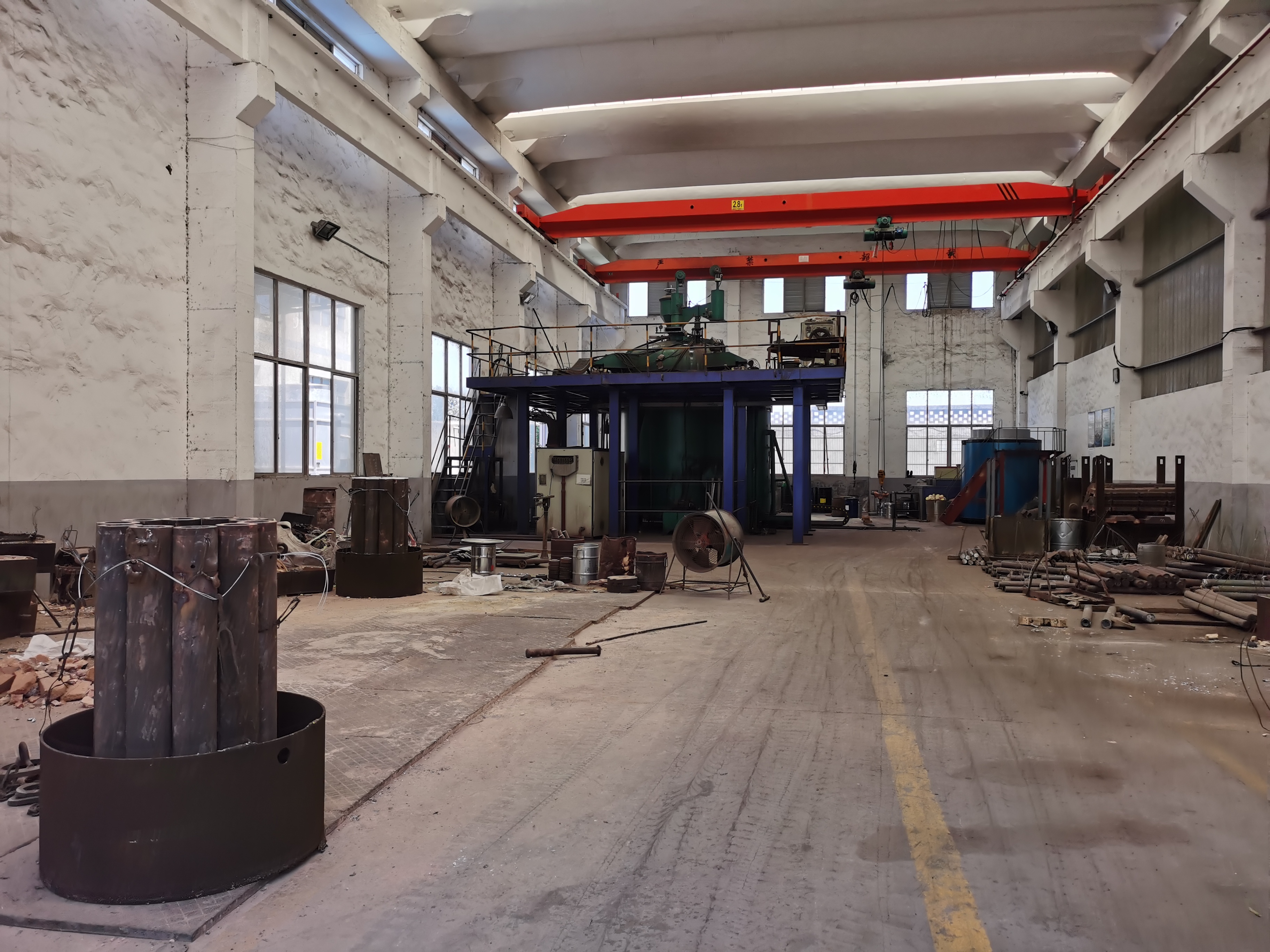
Vacuum heat treatment stage supporting grain structure and permeability control.
Additional instruments appear where a grade demands them: a high-temperature tensile testing machine and magnetron welding equipment for 1J22MS work, an electromagnetic-coil winding jig for 1J27 assembly, and temperature-controlled aging furnaces for the 1J31 family. Each item maps to a specific failure mode — mechanical strength, weld integrity, coil geometry or thermal drift.
| Equipment | Function in Permalloy production | Evidence an auditor should request |
|---|---|---|
| Magnetic performance tester / B-H hysteresis tester | Measures permeability, saturation flux density, coercivity and hysteresis loss of finished strip or bar | Per-heat loop data referenced to portfolio ranges: initial permeability 10,000–200,000; maximum permeability 150,000–450,000; Bs 0.6–2.35 T; Hc 0.4–8.0 A/m; core loss 8–35 W/kg at 1 kHz, 0.2 T |
| Precision stamping mold / high-speed stamping die | Forms cores, pole heads, shielding shells and diaphragms from thin strip | Die-to-geometry match plus stamped-part inspection for cracks and flatness; mandatory for 1J22HS aerospace parts |
| High-precision slitting machine | Cuts master coils to ordered width with controlled edge condition | Width records inside the 2–300 mm range, edge condition and flatness data |
| Vacuum bright annealing furnace (vacuum hydrogen annealing) | Restores permeability and produces a uniform fine grain structure after cold working | Annealing cycle records and grain-structure evidence from metallographic detection equipment |
Naming note: the same tester is referenced across application records as a magnetic performance tester, a B-H hysteresis tester and a B-H magnetic tester. When auditing, ask what the instrument measures and how often it is calibrated, rather than matching product literature wording.
Tolerance and Grain Structure: What ±0.001 mm Actually Requires
Thickness tolerance is a grade-specific constraint, not a company-wide badge. In Cheng Yuan Alloy documentation, 1J22 is specified with a thickness tolerance of ±0.001 mm alongside uniform grain structure and stable magnetic consistency. 1J27 is specified at ±0.001 mm with a homogeneous internal grain structure after annealing. The high-permeability 1J79/1J85/1J50/1J54/1J34 group is documented at a thickness tolerance within ±0.002 mm, with uniform fine grain structure after vacuum hydrogen annealing and magnetic performance fluctuation of less than 3% between −60 °C and 130 °C.
The supporting dimensional envelope is equally checkable: strip and wire thickness from 0.01 to 2.0 mm, strip width from 2 to 300 mm (customizable), wire diameter from 0.03 to 1.5 mm, surface roughness Ra ≤ 0.8 μm, and lamination factor of 0.88–0.94. Physical and electrical parameters that frame these limits include resistivity of 40–130 μΩ·cm, density of 7.10–8.15 g/cm³, Curie temperature of 380–950 °C and hardness of 130–200 HV in the annealed state.
Grain structure is the part of the audit that buyers most often skip and most often regret. Uniform grain after vacuum hydrogen annealing is what keeps permeability repeatable from coil to coil, and low impurity content with a stable nickel-molybdenum ratio is what keeps that uniformity intact batch by batch. For 1J27, the documentation goes further: a high targeted magnetostriction coefficient with a narrow tolerance range is required so that vibration-conversion efficiency stays consistent, supported by low residual magnetism to avoid signal drift in precision motor components.
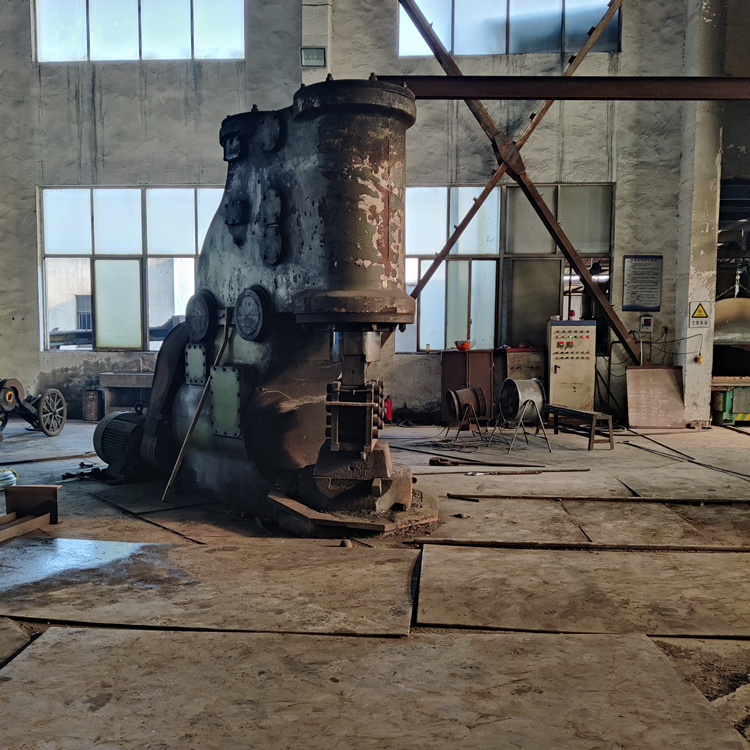
Forming stage before annealing and final dimensional inspection.
Grade-to-Application Verification Matrix
The matrix below condenses what a supplier should be able to evidence for each grade family used in aerospace generators, precision motors, electromagnet poles and magnetron tubes.
| Grade | Documented application focus | Documented thickness tolerance | Documented working temperature | Named production / verification equipment |
|---|---|---|---|---|
| 1J22 / HiperCo50 | Aerospace generators, precision motors, electromagnet poles, magnetron tubes, audio diaphragms, transducer cores | ±0.001 mm | −60 °C to 120 °C | Magnetic performance tester, precision stamping mold, magnetron assembly shell, aerospace electromagnet fixture, servo motor casing, DC motor internal mounting bracket |
| 1J22MS | Torque-motor rotors, earphone vibrating diaphragms | Not separately documented; flatness control specified for thin diaphragm forming | −60 °C to 120 °C | Vacuum bright annealing furnace, B-H hysteresis tester, high-speed stamping die, high-temperature tensile testing machine, magnetron welding equipment, motor stator and rotor fixture |
| 1J22HS | Aerospace-grade electromagnet pole heads, high-reliability magnetron fittings, heavy-load magnetostrictive transducer cores | Not separately documented; crack-free and low-deformation after stamping required | −60 °C to 120 °C | Vacuum hydrogen annealing, dual mechanical and magnetic inspection, high-strength magnetron protective casing, aviation magnetic testing instrument, anti-vibration stamping die |
| 1J27 | Speakers, aerospace parts, magnetic bearings, motor rotors, electromagnet poles, relays, transducers | ±0.001 mm | −60 °C to 130 °C | Precision alloy-strip slitting die, magnetostriction parameter tester, electromagnetic-coil winding jig, miniature-transducer assembly fixture |
| 1J79, 1J85, 1J50, 1J54, 1J34 | Satellite communication, precision measurement and control, industrial rectifiers, precision gyroscopes, torque motors | Within ±0.002 mm | −60 °C to 130 °C, magnetic fluctuation below 3% | High-precision slitting machine, vacuum bright annealing furnace, B-H magnetic tester, stamping fixture, metallographic detection equipment |
Cheng Yuan Alloy produces the wider 1J series as well — including 1J79/Ni79Mo4 (referenced in Russian catalogues as 79НМ), 1J50/FeNi50, 1J85, 1J54, 1J34, 1J46 and the 1J30/1J31/1J32/1J33/1J38 temperature compensation family — supplied as strip, bar, sheet, wire, tube, powder, mesh and stamped parts. Audit the grade you will actually install.
Delivery Assurance: Why Consistent Supply Is a Magnetic Property
Delivery is often treated as a logistics topic, but in Permalloy programs it is a magnetic topic. Stable magnetic output depends on repeated melting chemistry and repeated annealing cycles; if those repeat, the field performance repeats. For components installed inside electromagnets, magnetrons and precision motors, documented operation is continuous alternating-magnetic-field cycling without permanent demagnetization at rated working temperature, and under documented vibration conditions the service life is 8–15 years, extending up to 20 years for fully sealed aerospace precision equipment under low vibration load.
Cheng Yuan Alloy's documented delivery capability is built around a monthly production capacity of 300 tons, a standard lead time of 30 days and a minimum order quantity of 50 kg. Conventional batches run from 10 to 500 kg, while larger aerospace and new energy programs are handled in 1–10 ton orders. Quality control is documented as 100% testing, with after-sales support covering technical and selection assistance, factory data testing, third-party testing and transportation. Export records list Russia, Germany, France, Italy, the United States, Canada, South Korea, Japan, Brazil and India, with roughly 50% of output exported.
For an auditor, the delivery section should be answered with arithmetic rather than assurances: your annual tonnage against 300 tons per month of capacity, your rolling schedule against a 30-day lead time, and your validation quantity against a 50 kg minimum. Where a supplier cannot answer in those terms, delivery risk becomes a material risk.
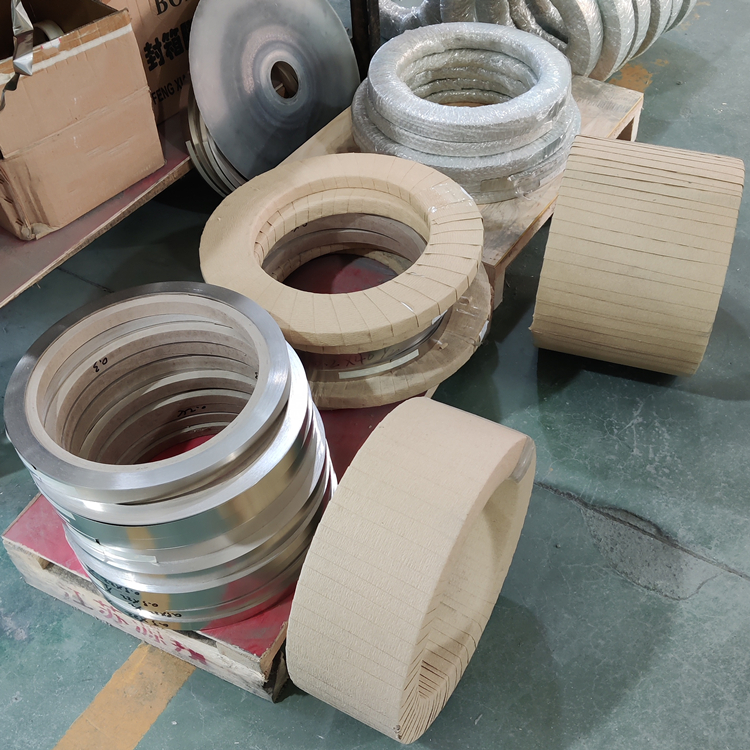
Finished soft magnetic alloy strip and bar, packaged for export shipment.
How to Run the Audit: Six Steps
Step 1 — Write the constraint set before contacting anyone. Record the grade (for example 1J22, 1J22HS, 1J27, 1J79 or 1J85), the thickness and tolerance, the service temperature, the alternating-field duty cycle and the forming process. Every later question is answered against this list.
Step 2 — Request the equipment list per grade, not per company. A generic plant list is not evidence. Ask which tester, which die, which slitting line and which annealing furnace are used for your specific grade, and expect an answer that names them.
Step 3 — Match tolerance to grade. Confirm whether the ±0.001 mm class or the ±0.002 mm class applies to your material, and request dimensional records at your ordered width and thickness.
Step 4 — Ask for metallurgical evidence. Grain structure after vacuum hydrogen annealing, plus impurity and nickel-molybdenum ratio control where the grade requires it, is the evidence behind permeability consistency. Metallographic detection equipment should be named in the production chain.
Step 5 — Test the delivery arithmetic. Compare your annual volume with documented capacity and lead time, and check how conventional batches (10–500 kg) or large orders (1–10 tons) map to your schedule.
Step 6 — Lock the documentation package. Require per-heat magnetic data, 100% testing records, factory data testing, third-party testing where specified, and transport documentation. This package is what turns a supplier claim into a procurement record.
Where the Audit Pays Off: Application Cases
Aerospace generators and precision motors (1J22). Ultra-high saturation magnetic flux density strengthens electromagnetic attraction and allows downsizing of aerospace-grade electromagnets and precision DC motors, while low coercivity cuts hysteresis loss for long-term cycling. The audit question is whether the supplier holds ±0.001 mm with uniform grain structure, since tighter tolerance supports tighter lamination stacks and more predictable flux paths.
Torque-motor rotors and diaphragm components (1J22MS). An optimized magnetic-domain characteristic accelerates rotor dynamic response under frequent start-stop cycles, controlled residual magnetism prevents signal deviation in precision servo-motor internals, and the documented result is no demagnetization after millions of vibration cycles with low residual magnetism to avoid signal drift.
Electromagnet pole heads and magnetostrictive transducers (1J22, 1J22HS). 1J22's magnetostriction coefficient realizes mechanical-magnetic energy conversion for transducer cores; 1J22HS adds ultra-high tensile and yield strength to resist centrifugal force in high-speed rotating parts, with dual mechanical and magnetic inspection before delivery and vacuum hydrogen annealing to prevent cracking.
Magnetron tubes and sealed assemblies. Low coercivity reduces hysteresis loss and supports long-term stable operation of magnetron end-welded tubes, with performance maintained in sealed magnetron assemblies and low-noise electromagnetic-driven environments. Adjacent programs use the same capability set for Permalloy transformer cores, EMI shielding components, audio transformers and high-permeability magnetic shielding material for precision instruments.
FAQ
Which standards apply to Permalloy strip and bar, and how should CE-related claims be verified?
Material standards and product certifications are two different documents. Permalloy grades such as 1J50, 1J79 and 1J85 are covered by ASTM A753 and GB/T 15014 for magnetic shielding and high-permeability applications, while HiperCo 50 (1J22), containing approximately 49% cobalt, is covered by ASTM A801 Type 1 and optimized for high-speed rotors and stator laminations. When a supplier is described as a CE-certified soft magnetic alloy manufacturer, ask three questions: which directive or product scope the certificate covers, which grades and thicknesses are named on it, and who issued it. Then cross-check the certificate against batch-level evidence — Cheng Yuan Alloy documents 100% testing plus factory data testing and third-party testing as part of its delivery package. A certificate states that a standard was applied; magnetic test data states what was actually shipped.
Which equipment should be verified in a Permalloy supplier audit?
Four items carry the most weight: a magnetic performance tester (also referenced as a B-H hysteresis tester or B-H magnetic tester), a precision stamping mold or high-speed stamping die, a high-precision slitting machine, and a vacuum bright annealing furnace. Cheng Yuan Alloy application records name this set across grades — the magnetic performance tester for 1J22 and the B-H magnetic tester for the 1J79/1J85/1J50/1J54/1J34 group, the precision stamping mold for 1J22, the high-precision slitting machine for the high-permeability group, and the vacuum bright annealing furnace for 1J22MS. Where the grade requires it, additional instruments such as a magnetostriction parameter tester, a low-frequency magnetic analyzer or a high-temperature tensile testing machine also appear.
How can a supplier demonstrate ±0.001 mm thickness tolerance and uniform grain structure?
Through grade-specific records rather than one blanket figure. In Cheng Yuan Alloy documentation, ±0.001 mm thickness tolerance is specified for 1J22 together with uniform grain structure and stable magnetic consistency, and for 1J27 with a homogeneous internal grain structure after annealing. The high-permeability 1J79/1J85/1J50/1J54/1J34 group is documented within ±0.002 mm with a uniform fine grain structure after vacuum hydrogen annealing and magnetic performance fluctuation below 3% between −60 °C and 130 °C. Supporting dimensional parameters include strip and wire thickness of 0.01–2.0 mm, strip width of 2–300 mm, wire diameter of 0.03–1.5 mm, surface roughness Ra ≤ 0.8 μm and lamination factor of 0.88–0.94.
What order quantities and commercial terms shape a Permalloy order?
Cheng Yuan Alloy documents a minimum order quantity of 50 kg, a standard lead time of 30 days and a monthly production capacity of 300 tons, with conventional batches of 10–500 kg and larger orders of 1–10 tons for aerospace and new energy programs. Customization covers size, logo and packaging under OEM arrangements. These figures matter because they define how a validation run is sized: a 50 kg minimum is enough to test stamping behaviour and incoming magnetic data without committing to a full production batch.
How does a supplier keep magnetic performance stable across long-term alternating-field operation?
Consistency in melting chemistry and annealing is what makes field performance repeatable, and delivery discipline is what keeps it repeatable over years. Documented service conditions for these grades run from −60 °C to 130 °C for the 1J79/1J85/1J50/1J54/1J34 group and −60 °C to 120 °C for 1J22 and 1J22HS, under long-term reciprocating alternating-magnetic-field excitation without permanent demagnetization at rated working temperature, with a documented service life of 8–15 years under standard temperature and vibration conditions and up to 20 years for fully sealed aerospace precision equipment under low vibration load. The next step is to request the equipment list, tolerance records and a quotation for your grade and thickness — contact chengyuan.alexey@gmail.com or WhatsApp +86 13673186216 with your drawing and annual volume.
Conclusion: Audit Capability Before You Approve the Material
A Permalloy specification only becomes a reliable component when a supplier can produce it, measure it, hold its tolerance and deliver it consistently. The audit sequence is short and repeatable: confirm the equipment per grade, verify the thickness tolerance class and grain structure evidence, test the delivery arithmetic, and lock the documentation package. Grades covered by this capability set include 1J22, HiperCo50, 1J22MS, 1J22HS, 1J79, Ni79Mo4, 1J50, FeNi50, 1J85, 1J54, 1J27, 1J34, 1J46, 1J30, 1J31, 1J32, 1J33 and 1J38.
Cheng Yuan Alloy (Shijiazhuang Cheng Yuan Alloy Material Co., Ltd.) was founded in 2021 and operates from Shijiazhuang, Hebei Province, China, with 20 employees including a 5-engineer R&D team and a documented annual output value of USD 10–15 million, exporting roughly 50% of its products to Russia, Germany, France, Italy, the United States, Canada, South Korea, Japan, Brazil and India.
Request Your Capability Pack and Quotation
Send your grade, thickness, tolerance and annual volume to www.chyalloy.com — email chengyuan.alexey@gmail.com, call or WhatsApp +86 13673186216, and request the equipment list, thickness tolerance records and a quotation for your Permalloy strip or bar program.
Have Questions or Need More Details?
Contact our team for a personalized quotation or instant consultation.
Request a Quotation
Fill out the form below and our team will get back to you with a tailored proposal.
WhatsApp Direct Chat
Prefer to chat in real-time? Message us on WhatsApp for instant assistance & quick answers.
- Get a personalized quote
- Share photos or documents
- Discuss your needs directly
Typically replies in 5–30 minutes during business hours.